
If your sump pump runs but the water level is not dropping, a blocked discharge line is one possible cause—not a sure diagnosis. Start with observations you can make from a dry, safe place: whether the water is rising, whether water exits outside, and whether the pump sounds different. Do not enter standing water to inspect it.
Address water near electricity first
The CDC’s electrical-hazard guidance says to turn off power at the main breaker or fuse panel if electrical circuits or equipment are wet or in or near water. Do this only if you can reach and operate the panel safely without entering standing water. Otherwise, call an electrician to turn it off.
Never operate electrical equipment or turn power on or off while standing in water. Do not handle the pump’s plug with wet hands or when the plug or surrounding area is wet. Equipment exposed to water needs inspection by a qualified electrician before power is restored.
If someone may have received an electric shock, do not touch them while they may still be in contact with electricity. Call 911. Electrical danger comes before arranging pump service. For related precautions, see our guide to basement water near an electrical outlet.
Why a running motor does not prove the pump works
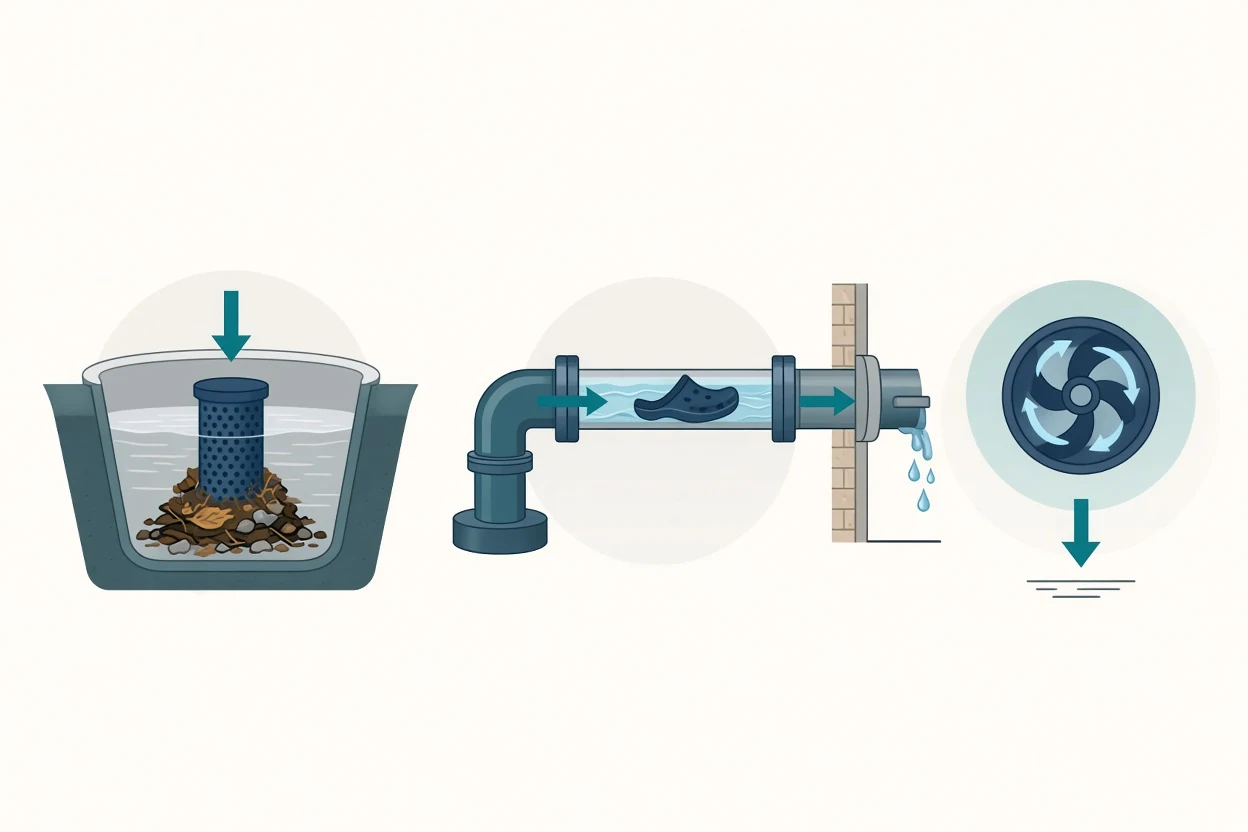
Roto-Rooter’s sump pump maintenance guide identifies three possible reasons water drains slowly or remains in the pit: a blocked discharge line, debris at the intake, or a worn impeller. The impeller is the part inside the pump that moves water.
These problems affect different parts of the water’s path:
- Discharge obstruction: Water cannot flow freely through the pipe or hose leading outside.
- Intake debris: Mud, gravel, or other objects restrict water entering the pump.
- Internal wear: The pump may run without moving water effectively.
Sound alone cannot tell you which part needs attention. A visible obstruction outside is useful evidence, but a clear-looking outlet does not rule out a blockage farther along the line or a problem inside the pump.
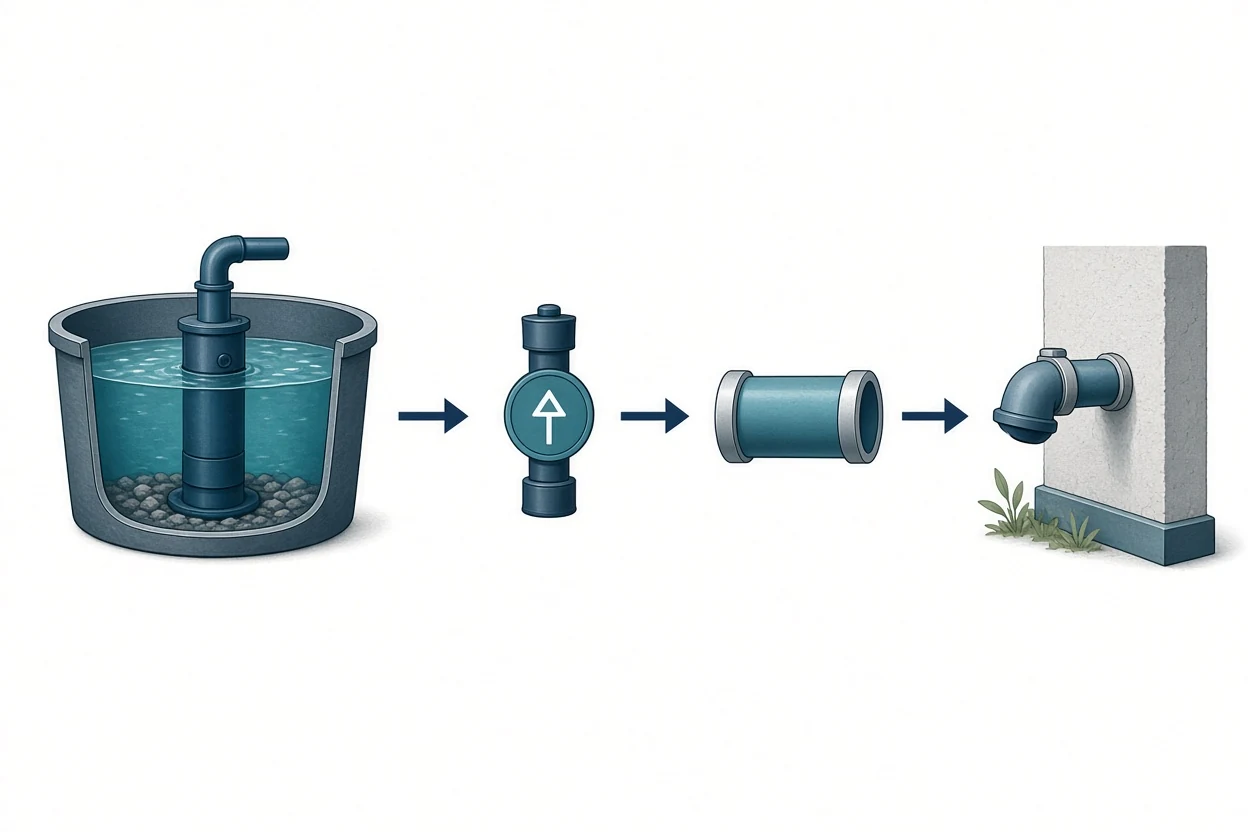
Check the visible discharge route—not the inside of the pump
If the outdoor outlet is safely accessible, look at it without taking anything apart. Roto-Rooter recommends checking the discharge pipe for clogs, ice buildup, and other obstructions, and confirming that water goes away from the foundation.
Note what you can already see:
- Is something visibly covering the outlet?
- Is water exiting while the pump is running?
- Are there visible cracks, loose connections, or water pooling along the discharge route?
- Does the outlet send water back toward the house?
Report those findings rather than assuming the hose needs clearing. Keep this check visual; leave pipe opening, pump removal, and intake cleaning for an inspection under safe conditions. During an active drainage failure, do not add water to the pit just to test it.
What returning water or unusual sounds can mean
If you already noticed water returning after shutdown, mention it. Roto-Rooter explains that the check valve helps prevent water from flowing back into the pit. Some return flow is normal, so backflow alone does not prove the valve has failed. Repeated cycling or excessive noise can help guide an inspection.
The same guide links grinding, rattling, or strong vibration with possible debris or worn parts. These are clues—not a reason to reach into the pit. If the pump keeps running while the level stays high or rises, seek professional diagnosis rather than relying on the motor noise as reassurance.
Ask for an inspection of the whole water path
Rooter Experts Drain Cleaning provides plumbing services in Northern New Jersey, including communities such as Moonachie, Hackensack, and Clifton. Give your town and confirm availability and whether your specific sump pump or discharge-line work is offered.
Share the observations above, plus the pump’s make and model if you already have that information. State clearly whether water is still rising and whether access is dry. Ask whether the inspection will assess the intake, pump, discharge route, and check valve before recommending work. The useful next step is finding where water movement fails—not assuming that either clearing the hose or replacing the pump will solve it.
Talk with Rooter Experts
Call Rooter Experts at (201) 583-4778 for plumbing or drain service in Northern New Jersey.