
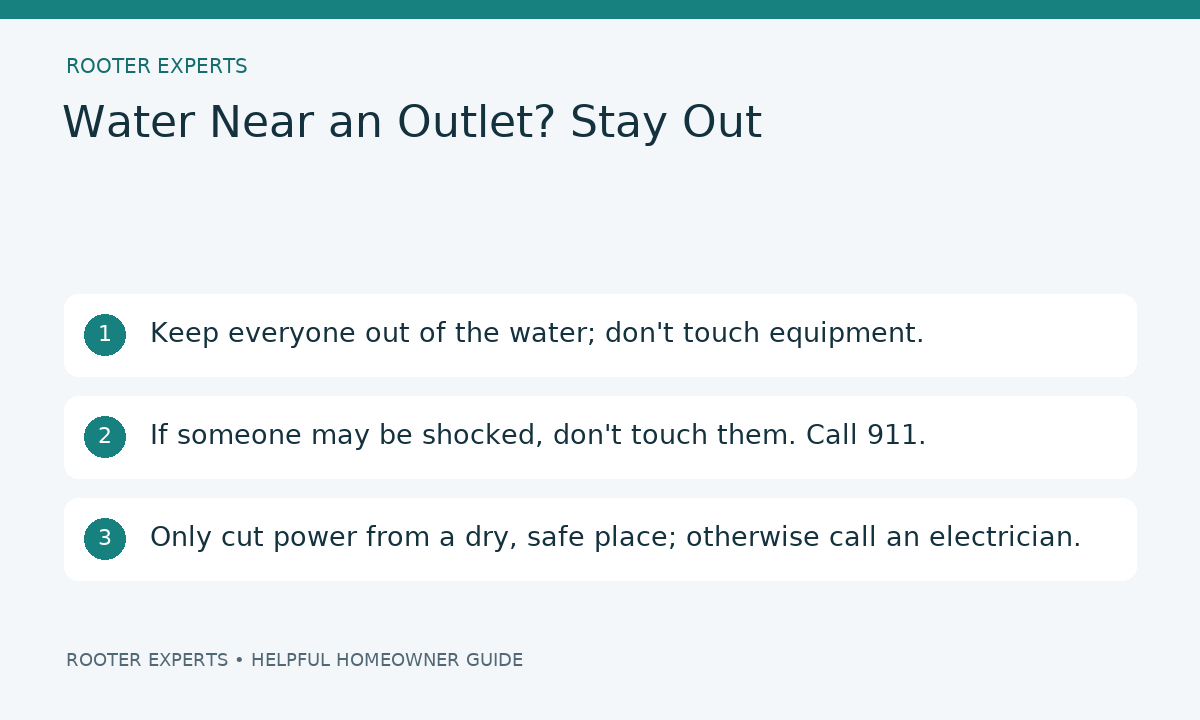
If water is backing up near a basement outlet, stay out of the water and leave electrical equipment alone. Do not step into standing water to reach a breaker, move a plugged-in appliance, or inspect the drain. The first job is to make sure the electrical hazard is handled safely; the drain comes next.
The CDC’s electrical safety guidance says to turn off power at the main breaker or fuse panel if electrical circuits or equipment have gotten wet or are in or near water. But it also says not to enter standing water to reach the main switch. If you cannot get to the panel from a dry, safe place, call an electrician to turn off the power. Never switch power on or off, or use an electric tool or appliance, while standing in water.
If someone may have been shocked
Look first; do not touch the person. They may still be in contact with electricity, and touching them could shock you too. Call 911 or have someone else call. Turn off the electrical source only if you can do so safely, without entering water. Tell the dispatcher what you can see and follow their instructions. Do not delay the emergency call to arrange drain service. These steps follow the CDC’s electric-shock first aid guidance.
What can you do from a safe place?
You do not need to identify the clog before asking for help. From outside the affected area, note where you first saw water, whether it is still rising, and whether it appears to be coming from a floor drain, toilet, or another opening. Think about whether other fixtures were slow or backing up before you stopped using them. Do not run a sink, flush a toilet, or start a washer to test the problem during an active backup.
Keep people away from the wet area. Water from a drain or sewer backup may contain sewage; the CDC advises avoiding contact with standing water that may contain it. Do not assume gloves or boots make it safe to walk through water near electrical equipment.
If the backup followed heavy rain, that timing is useful to report, but it does not tell you by itself where the water came from. Once the electrical concern is addressed, our guide to basement drains backing up after heavy rain can help you organize what you observed without entering the wet area.
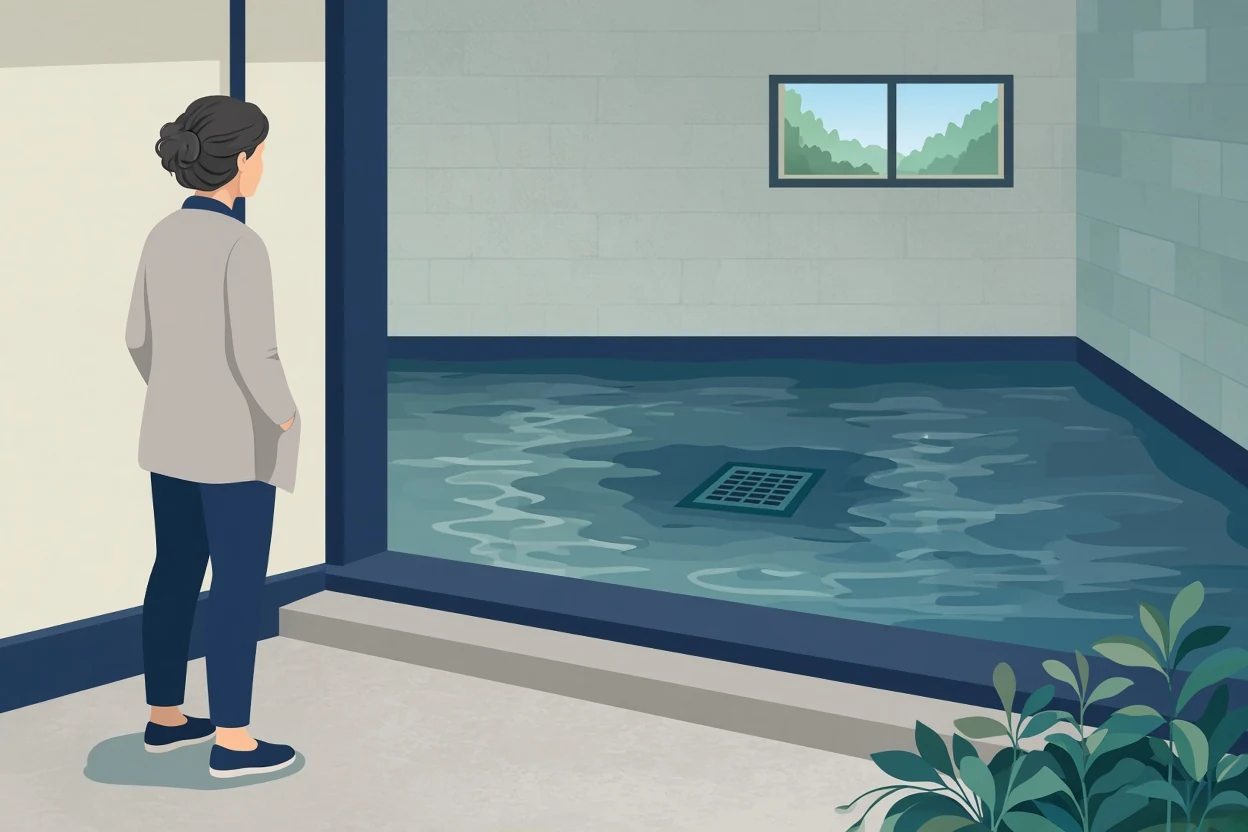
When the drain work can begin
Do not turn the power back on just because the water has gone down. The CDC says wet electrical equipment should be inspected by a qualified electrician before power is restored. Electrical equipment and appliances must also be completely dry before they return to service.
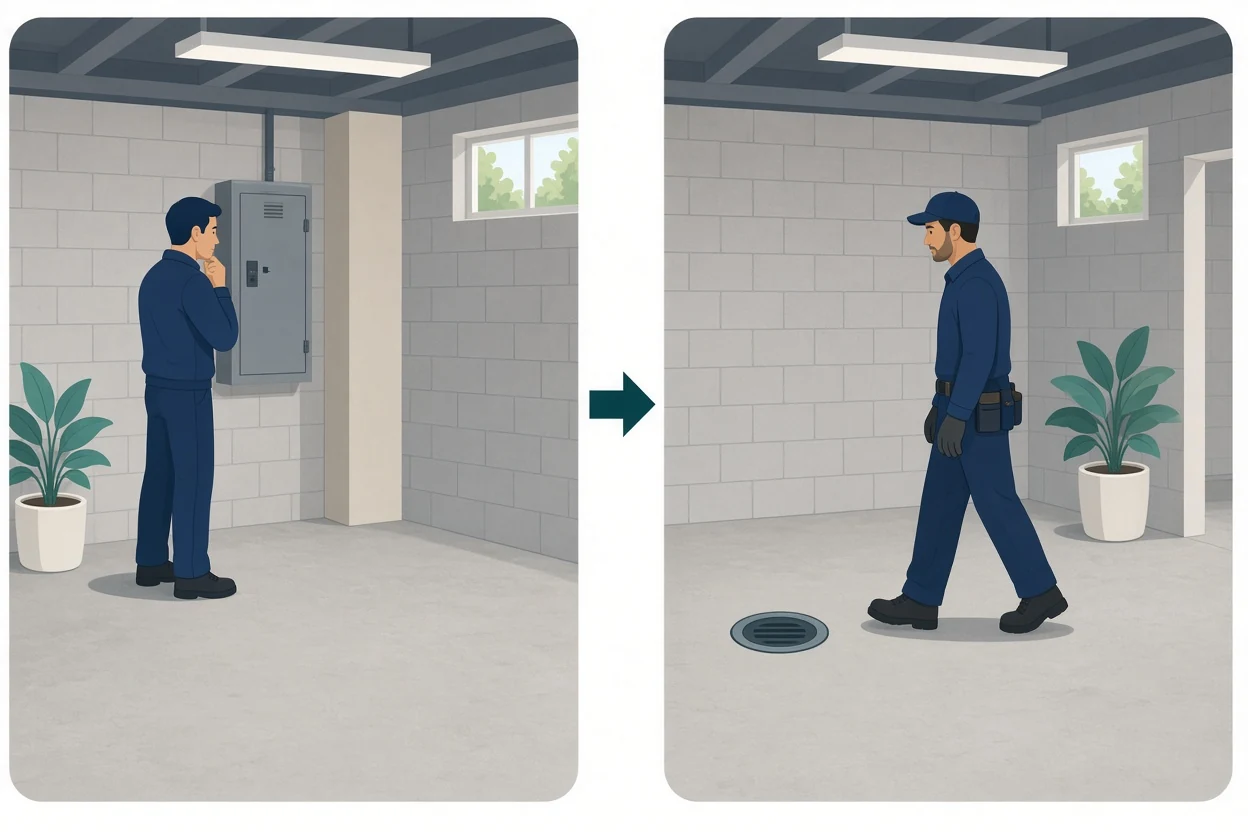
Once the electrical hazard is being handled, contact a drain or sewer service provider. Rooter Experts offers drain cleaning in Bergen and Passaic County communities, including Moonachie, Hackensack, Clifton, and Wayne. When you reach out, give your town, where the water appeared, whether it is still rising, which fixtures were affected, and whether an electrician has cleared access to the area. That gives the drain team the details it needs without asking you to go back into unsafe water.
Talk with Rooter Experts
Call Rooter Experts at (201) 583-4778 for plumbing or drain service in Northern New Jersey.