
Rooter Experts Blog
Is Drain Cleaner Bad for Pipes? The Risky Truth for NJ Homes
Yes, chemical drain cleaners can seriously damage your pipes, and many Northern NJ homeowners use them far too often without realizing the long-term harm they cause. Whether you have older cast iron pipes from the 1950s or modern PVC, the wrong drain cleaner can corrode, weaken, or crack your plumbing. This guide tells you exactly what’s safe, what’s not, and when to call a licensed plumber instead.
What Does ‘Is Drain Cleaner Bad for Pipes?’ Really Mean?
Chemical drain cleaners are bad for pipes because they use highly corrosive acids or alkalis — including sulfuric acid, sodium hydroxide (lye), and bleach — to dissolve clogs. The same reactions that break down hair, grease, and soap scum also attack the pipe walls. Prolonged or repeated use, especially in older homes, accelerates pipe degradation, increases the risk of leaks, and can void manufacturer warranties on newer plumbing systems. The short answer: occasional, careful use in healthy PVC pipes carries low risk. Regular use — or any use in old, corroded, or delicate pipes — is asking for expensive trouble.
How Does Drain Cleaner Work and Why Does That Matter for Pipe Safety?
Understanding the chemistry is key to understanding the damage. Most chemical drain cleaners fall into three categories:
- Caustic (Alkaline) Cleaners: Products containing sodium hydroxide (lye) generate intense heat when they come into contact with water. That heat dissolves grease but also softens and weakens PVC plastic pipes over time.
- Acid-Based Cleaners: Sulfuric acid cleaners are the most powerful — and the most dangerous. They eat through organic clogs fast, but they also corrode metal pipes, especially older galvanized steel and copper common in 1960s-era Bergen County homes.
- Oxidizing Cleaners: Bleach and peroxide-based products release gas as they oxidize material. Safer than acids, but still capable of degrading rubber seals and joints with repeated use.
The critical issue is that these chemical reactions don’t stop at the clog. They continue until the product drains out completely — and if it pools near a joint, a bend, or a weak spot, that’s where damage concentrates.
How Chemical Drain Cleaners Affect Each Pipe Type
Not all pipes react the same way. Here’s what we see most often in Northern NJ homes:
PVC Pipes — Is Drain Cleaner Safe for PVC?
PVC (polyvinyl chloride) is the white plastic pipe found in most homes built after 1980. Caustic drain cleaners that generate heat are the biggest threat to PVC — high temperatures can warp, soften, and weaken the plastic at joints and bends. One or two uses? Probably fine. Monthly use? You’re shortening the life of your plumbing. In most Northern NJ homes we service in Paramus, Wayne, and Clifton, we find PVC that’s been etched or discolored inside from repeated chemical treatments.
Old Pipes — Is Drain Cleaner Safe for Old, Corroded Plumbing?
No. Old pipes should never be poured with chemical drain cleaners. Homes built in the 1940s–1970s in Moonachie, Teaneck, Ridgewood, and Emerson often still have galvanized steel or cast iron drain lines. These metals are already corroded on the interior. Acid-based or caustic cleaners accelerate pitting, widen microcracks, and can trigger pinhole leaks or full pipe failures — especially in the cold winter months when freeze-thaw cycles already stress the metal. In our camera inspections of older Northern NJ homes, we’ve found drain cleaners responsible for complete pipe wall collapse that required full lateral replacement.
Copper and Metal Pipes — Harsh Drain Cleaner Effects on Plumbing
Acid-based cleaners are particularly destructive to copper pipes. They accelerate the natural oxidation of copper, thinning pipe walls and attacking solder joints. If your home has copper supply or drain lines, avoid acid drain cleaners entirely.
Signs Drain Cleaner Has Already Damaged Your Pipes
If you have used chemical openers frequently, look out for these warning signs:
- Persistent slow drain after using drain cleaner — the clog is still there, but now the pipe may also be compromised
- Foul chemical odor lingering more than 24 hours after use
- Visible cracks, discoloration, or deformity on plastic pipes under sinks or in exposed areas
- Gurgling sounds in multiple drains — a sign that the main sewer line in your Passaic or Bergen County home may be affected
- Bubbling or soft PVC pipe walls when you press gently — a sign that heat damage has weakened the plastic
- New leak at a joint or bend shortly after drain cleaner use
If you notice any of these signs, please contact us for Drain Cleaning Service. We can perform a camera inspection to accurately assess the extent of the damage.
Safe Alternatives to Drain Cleaners
Before you panic, try these safer methods. They might not be as aggressive as acid, but they won’t cost you a pipe replacement.
- The Plunger: Simple but effective for sink and toilet clogs. Ensure you have a tight seal.
- Baking Soda and Vinegar: A classic natural drain cleaner for pipes. Pour 1/2 cup of baking soda, then 1/2 cup of vinegar. Cover the drain, let it fizz for 15 minutes, and flush with hot water. This can help break up minor grease without corrosion.
- Enzymatic Drain Cleaners: These use bacteria/enzymes to break down organic waste. Enzymatic cleaners are the gentlest option for pipes and septic systems. They work slowly (often overnight) and are best for light maintenance, not heavy clogs.
- Professional Snaking or Hydro-jetting: The only way to physically remove a blockage.
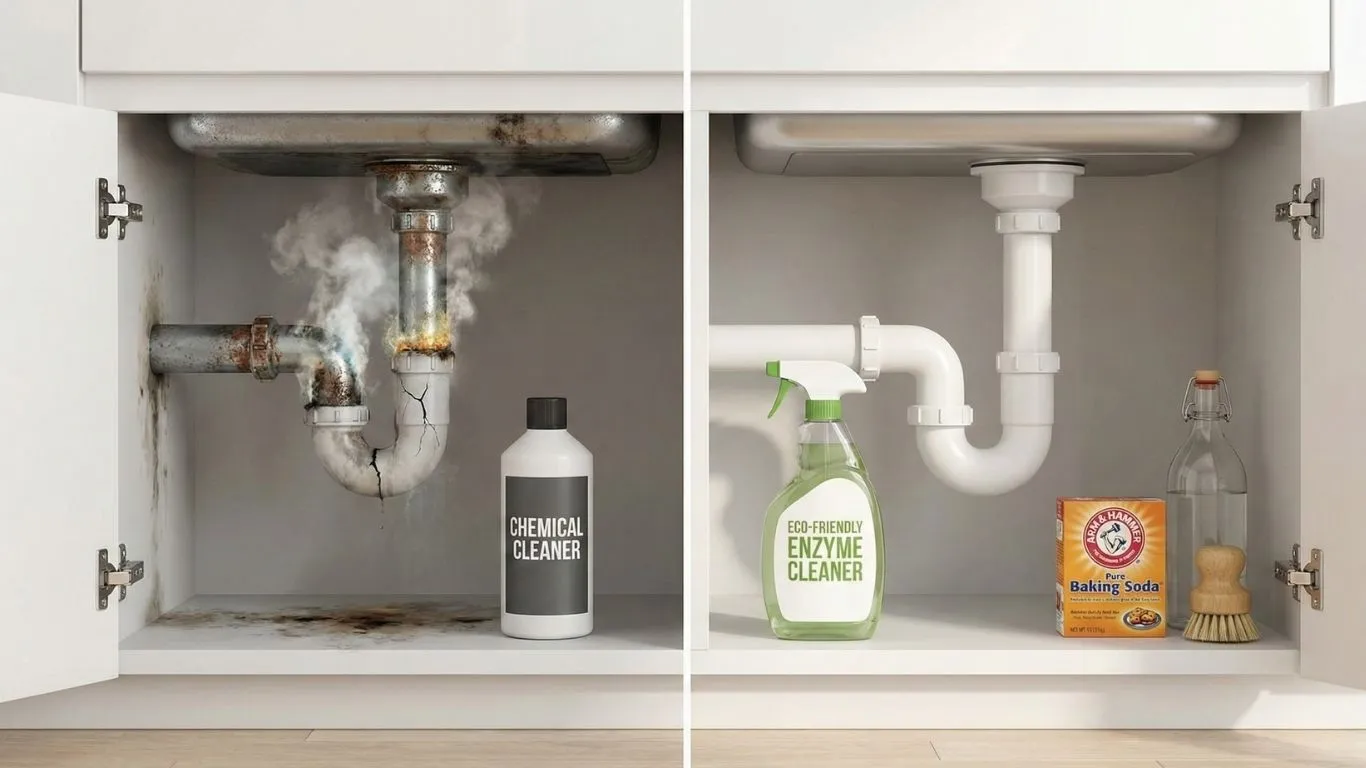
Safe Alternatives to Drain Cleaners
Chemical Drain Cleaner vs. Safe Alternatives — Comparison Table
Use this table to decide the safest and most effective approach for your situation:
| Option | Effectiveness | Cost range | Pipe safety | Best for |
|---|---|---|---|---|
| Chemical drain cleaner | Low–Medium | $5–$15 | ⚠️ Risky | Minor, hair-only clogs in new PVC |
| Baking soda + vinegar | Low | $1–$3 | ✅ Safe | Minor buildup, monthly maintenance |
| Enzyme drain cleaner | Medium | $8–$20 | ✅ Safe | Slow drains, organic buildup |
| Manual drain snake | Medium–High | $0–$30 | ✅ Safe | Solid blockages within 25 ft |
| Professional hydro jetting | Very high | $400–$900 | ✅ Code-compliant | Stubborn/recurring clogs, grease, roots |
| Camera inspection + diagnosis | Definitive | Varies | ✅ No risk | Repeat blockages; unknown cause |
How Often Can You Use Drain Cleaner? Frequency and Long-Term Effects on Pipes
Use chemical drain cleaners sparingly, if at all — and only in healthy PVC pipes free of existing damage. There’s no safe universal frequency; repeated use accelerates pipe degradation, particularly at joints, curves, and older connections. If a drain needs clearing that often, there’s an underlying problem chemicals won’t fix. A professional drain cleaning call is a smarter investment than repeatedly buying products that worsen the pipe.
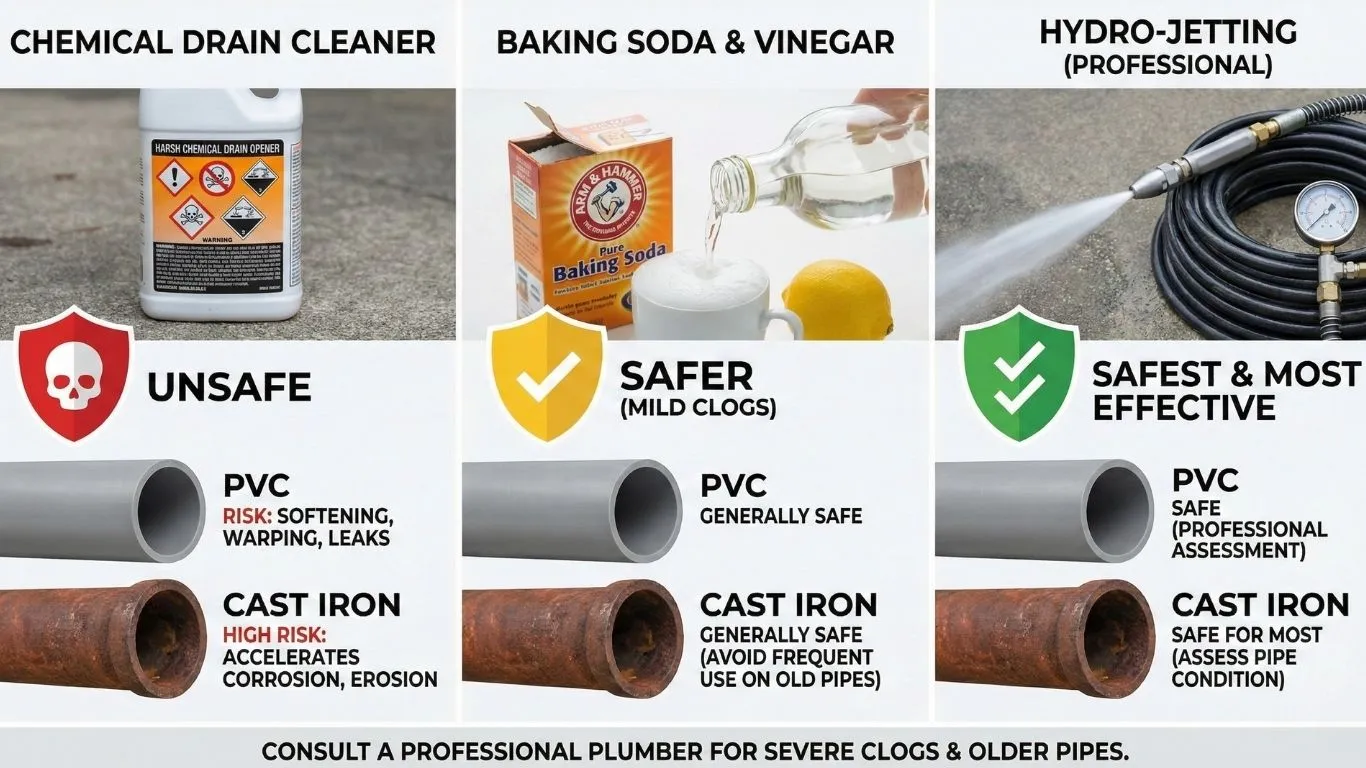
The Long-Term Effects of Using Chemical Drain Cleaners on Your Sewer Lines
Conclusion: Protect Your Pipes, Call a Licensed Plumber
Chemical drain cleaners are convenient, but they’re not a long-term solution and in older Northern NJ homes with aging plumbing infrastructure, they can cause serious, expensive damage. Enzyme cleaners, baking soda, and mechanical snaking are safer for your pipes. For recurring or stubborn clogs, professional diagnosis is always the smarter choice.
At Rooter Experts and Drain Cleaning, we’re a locally owned, family-operated emergency plumbing service based in Moonachie, NJ. We serve Bergen County, Passaic County, and all of Northern New Jersey — including Ridgewood, Clifton, Wayne, Teaneck, Wanaque, West Milford, Bloomingdale, Paramus, and Emerson. Every job is owner-led, camera-documented, and 100% code-compliant. We don’t upsell. We show you the footage, explain your options, and fix only what’s needed.
Frequently Asked Questions About Drain Cleaner and Pipe Safety
Is chemical drain cleaner safe for pipes?
No. Most plumbers advise against regular use because heat and corrosion damage both old metal pipes and modern PVC systems over time.
Does drain cleaner damage PVC pipes?
Yes, especially through repeated heat exposure that softens joints and gaskets. Limit to rare, single-use alkaline products only.
Is drain cleaner safe for old pipes in Northern NJ homes?
No, particularly cast-iron lines in 1950s–1970s properties in Bergen County and Passaic County. Chemicals speed up existing corrosion.
What are the signs drain cleaner damaged pipes?
Recurring clogs, gurgling sounds, slow multi-fixture drainage, odors, or new leaks. These require immediate professional camera inspection.
Are enzymatic or natural drain cleaners better?
Yes, enzymatic drain cleaners are safe for pipes and baking soda and vinegar are safer for drains. It makes them far superior for regular use and long-term pipe health.
When should I skip DIY and call a plumber?
Immediately, if clogs return quickly, multiple drains fail, or you suspect main line issues. Our plumbing services NJ team provides same-day diagnosis and repair.
Need a drain or sewer line cleared in North Jersey? Rooter Experts and Drain Cleaning offers flat-rate, camera-verified drain cleaning across Bergen and Passaic County — no upselling, no surprise charges. Call (201) 583-4778 or get a free quote.