
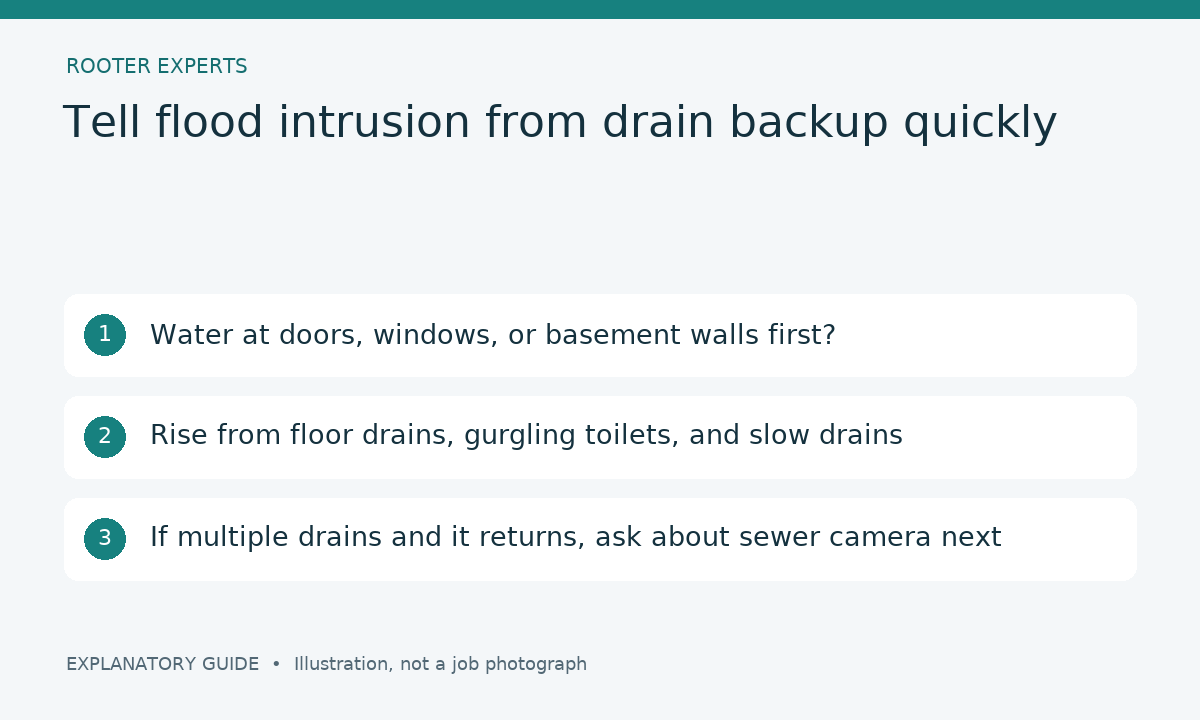
A basement drain backing up after heavy rain does not always mean the floor drain itself is clogged. The water could be entering from outside, collecting because of a sump pump issue, or rising through the drain system. Your first job is to stay safe, stop adding water to the drains, and look for clues without taking pipes apart.
During active flooding, stay out of water near electrical equipment and follow local emergency alerts. The National Weather Service flood safety guide explains how to stay safe as water rises.
Look for where the water is coming from
From a safe, dry place, note where the water first appears. Outside flooding and a drain backup can happen at the same time, so these clues can help you describe the problem without diagnosing it yourself.
Signs that water may be entering from outside include:
- Water running through a basement door or window
- Wet walls or water appearing along the foundation
- Water spreading toward the floor drain instead of rising from it
- A full sump pit or water around the sump pump area
Signs that the drain system may be involved include:
- Water rising directly from a basement floor drain
- A toilet bubbling when another fixture is used
- Several drains becoming slow at the same time
- Water returning through a tub, shower, or low basement drain
- The problem appearing when someone flushes a toilet or runs a washing machine
Several affected fixtures can point to a deeper problem than one clogged drain. Review the full list of main sewer line clog symptoms if you notice trouble in more than one part of the home.
If the overflow starts as the washer empties, see the washing-machine drain backup guide. It explains which observations help distinguish a laundry-branch problem from a wider drainage issue without running another load to test it.
What to do right away
If water is rising from a drain, stop sending more water into the plumbing system.
- Do not flush toilets.
- Pause showers, laundry, and dishwashing.
- Keep children and pets away from the affected area.
- Avoid direct contact with backup water when its source is unknown.
- Note which drain backed up first and whether other fixtures are gurgling or slow.
- Take photos from a safe, dry place so you can show how the problem started.
If local officials issue an evacuation order, follow it. Keep out of the basement if reaching the drain would mean crossing standing water.
Check the sump pump from a safe place
A sump pump handles groundwater collected in its pit. It is different from the sanitary drain system that carries wastewater away from sinks, toilets, and other fixtures.
From a dry location, look for simple clues:
- Is the sump pit unusually full?
- Does the pump appear to be running?
- Did the home lose power during the storm?
- Is water entering faster than the pump is removing it?
Do not reach into standing water or handle electrical equipment in a wet area. If your main concern is groundwater rather than water rising from a drain, read about sump pumps and battery backup systems.
Do not pour drain chemicals into the backup
A bottle of drain cleaner is not a reliable way to diagnose a basement backup. It also leaves chemical product in standing water and in the pipe where someone may later need to work.
Do not mix cleaners, bleach, or other products. If a chemical has already been used, tell the service provider what product went into the drain. For more background, see how drain cleaner works and its safety risks.
You should also avoid removing a sewer cleanout cap when the line may be holding backed-up water. Opening it could release the contents at that spot.
When drain cleaning may help
Drain cleaning may help when a physical blockage is stopping normal flow. The exact method depends on where the blockage is and what is inside the pipe.
Professional help makes sense when:
- More than one fixture is affected
- Water rises from the lowest drain when another fixture is used
- The backup continues after the rain ends
- The same problem returns during later storms
- Sewage or a strong sewer odor is present
- A basic fixture-level fix does not restore drainage
For a persistent floor-drain blockage, ask about basement drain cleaning. When several fixtures back up together, main sewer line cleaning may be the more relevant service to discuss.
When a sewer camera inspection may help
A recurring backup needs more than a guess. A sewer camera inspection may help locate the problem and show the condition inside an accessible line.
A camera inspection may be worth discussing when:
- Cleaning restores flow but the backup soon returns
- The basement drain acts up during repeated storms
- Several drains show the same symptoms
- The cause of the blockage is unclear
- You need better information before choosing another service
Drain cleaning and camera inspection serve different purposes. Cleaning addresses restricted flow. A camera helps examine the line. Depending on the symptoms, one or both may be appropriate.
Write down what happened
Before requesting service, make a short record:
- When the rain started
- When the backup began
- Where water first appeared
- Which fixtures were in use
- Whether several drains were slow
- Whether the sump pit was full
- Whether this has happened before
Share these details when you call. They help the technician assess whether to focus on one drain, the main sewer line or a separate water-entry problem.
Talk with Rooter Experts
Call Rooter Experts at (201) 583-4778 to discuss your drain problem.