
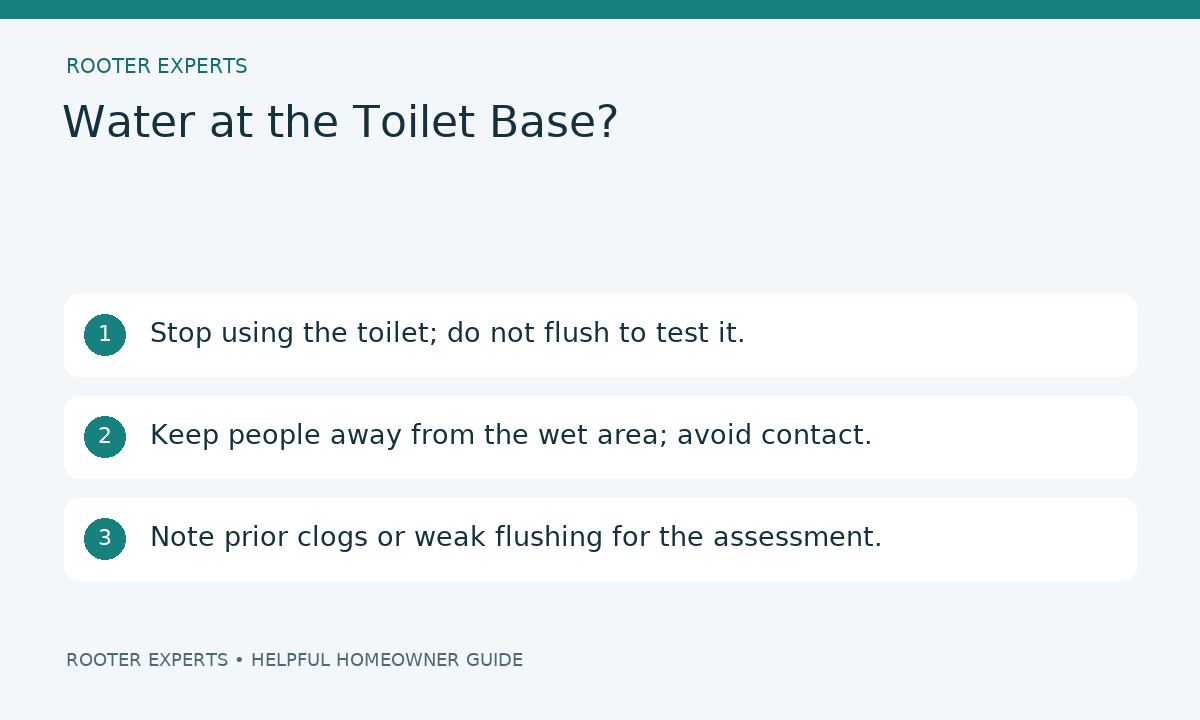
Water around your toilet base calls for a leak assessment—not an automatic order for a new toilet. Stop using the toilet while it is leaking, and do not flush again just to watch where water appears. Note what happened before you noticed the puddle, including any slow flushing or clogs.
Roto-Rooter’s toilet-repair guidance identifies two possible causes of a base leak: a bad wax ring seal or a partially clogged toilet drain stack. Those possibilities call for different checks, so ask a plumber to identify the cause before choosing the repair.
A base leak is different from a running toilet
Start by describing where the water goes.
A toilet that runs internally lets water pass from the tank into the bowl. Roto-Rooter explains that a flapper—the rubber valve inside the tank—is often involved. That is a different symptom from water appearing on the bathroom floor.
If you hear repeated refilling but have not seen any floor water, see our guide to why a toilet keeps running after flushing.
If there is water around the base, report that floor leak even if the toilet also runs. Do not assume a flapper repair will address both symptoms.
Two possible causes to discuss
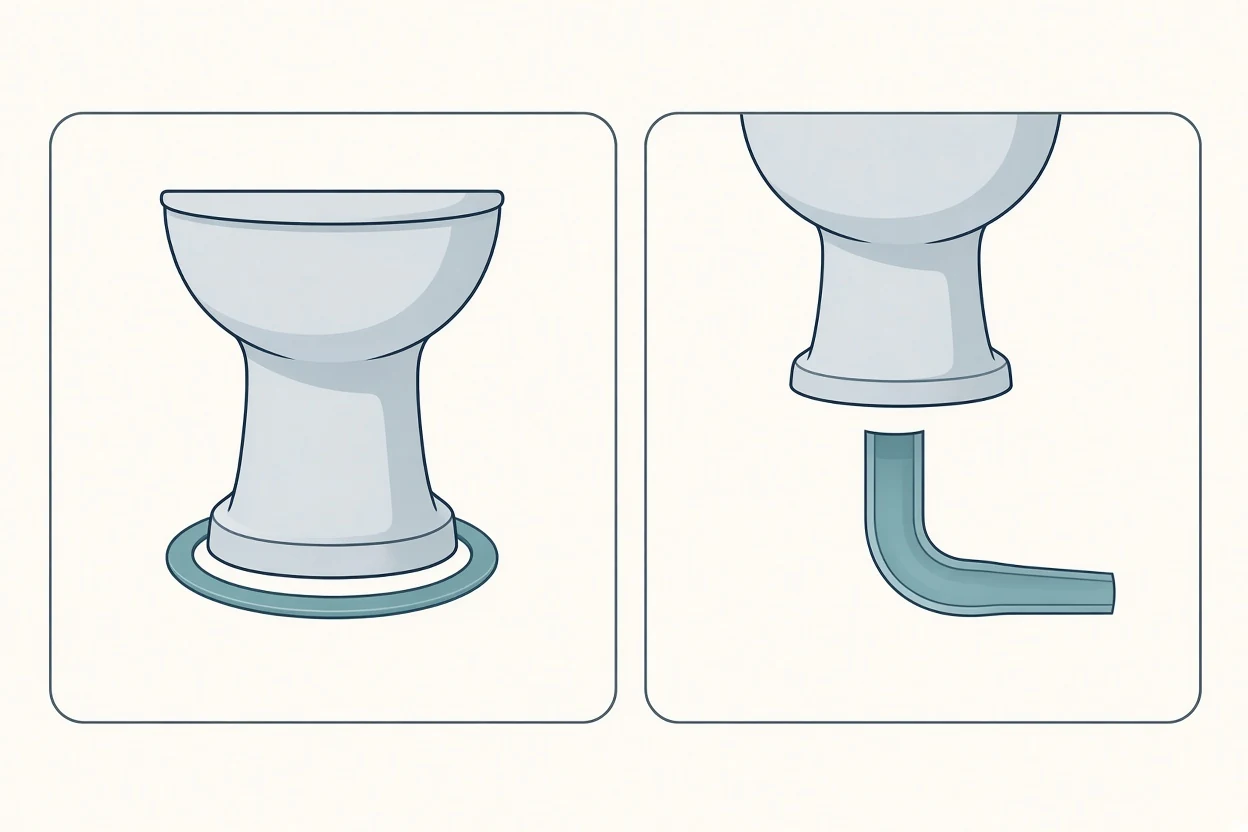
A failed wax ring seal
A bad wax ring is one possible explanation for water at the base. The useful question is not simply, “Can you replace the ring?” Ask, “What findings show that the seal is the source of the leak?”
Mention whether you have already noticed the toilet rocking or feeling loose during normal use. Roto-Rooter lists an unstable toilet, visible cracks and floor leaks among signs that a toilet needs repair. Do not rock the toilet deliberately to test it.
A partially blocked drain
The same guidance says a partial blockage in the toilet drain stack may allow water to collect beneath the toilet and may require professional drain cleaning.
Tell the plumber about clogs, weak flushing or gurgling you noticed before the leak. These observations help frame the assessment; none proves the cause on its own.
A base leak alone does not establish that your whole sewer line needs cleaning. Ask which drain is suspected and what supports that conclusion before approving broader work.
What you can observe without taking anything apart
Leave toilet removal and hidden-seal inspection to the repair assessment. From a dry, safe position, collect a few useful details:
- Did you first notice water after a flush, or while the toilet was unused?
- Can you see water higher up on the tank or bowl, rather than only at floor level?
- Had the toilet been clogging, flushing weakly or making unusual sounds?
- Are there visible cracks or movement you already noticed?
- Is the water still spreading?
Use observations you already have. Do not run other fixtures to test an active backup. Keep people away from the wet area, and avoid contact with the leaked water.
Request a diagnosis before choosing the repair
Ask for a toilet-leak assessment and share the observations above. Before approving work, ask the plumber to explain whether the proposed repair addresses a seal, another leaking toilet part, a drain obstruction or more than one issue. If replacement is suggested, ask what condition makes replacement preferable to repair.
Rooter Experts Drain Cleaning provides plumbing services in Northern New Jersey, including Moonachie and Hackensack. Its faucet and leak repair page describes related leak services. Give your town, confirm service availability and say whether the toilet is still leaking when requesting a visit.
Talk with Rooter Experts
Call Rooter Experts at (201) 583-4778 for plumbing or drain service in Northern New Jersey.