
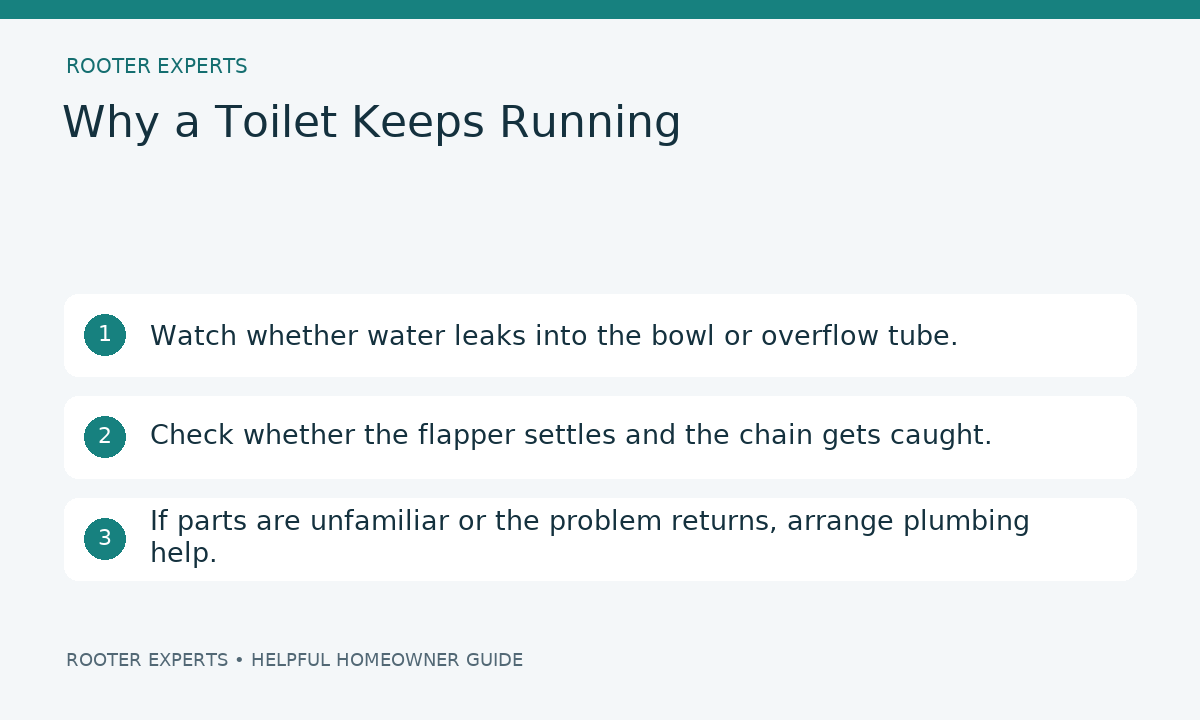
If your toilet keeps running after flushing, start by checking where the water is going. Water leaking from the tank into the bowl points toward a sealing problem. Water rising into the tank’s overflow tube points toward a filling problem. Those clues can help you avoid replacing the wrong part.
Roto-Rooter’s running-toilet guide identifies worn flappers, incorrect chain length, faulty fill valves, long refill tubes and poorly positioned floats as possible causes. Jiggling the handle may stop the sound for now, but it does not resolve the underlying problem.
First, watch what happens in the tank
If the tank lid lifts off freely, remove it carefully and place it on a stable surface. Start with a visual check rather than taking parts apart.
Look for these clues after the flush:
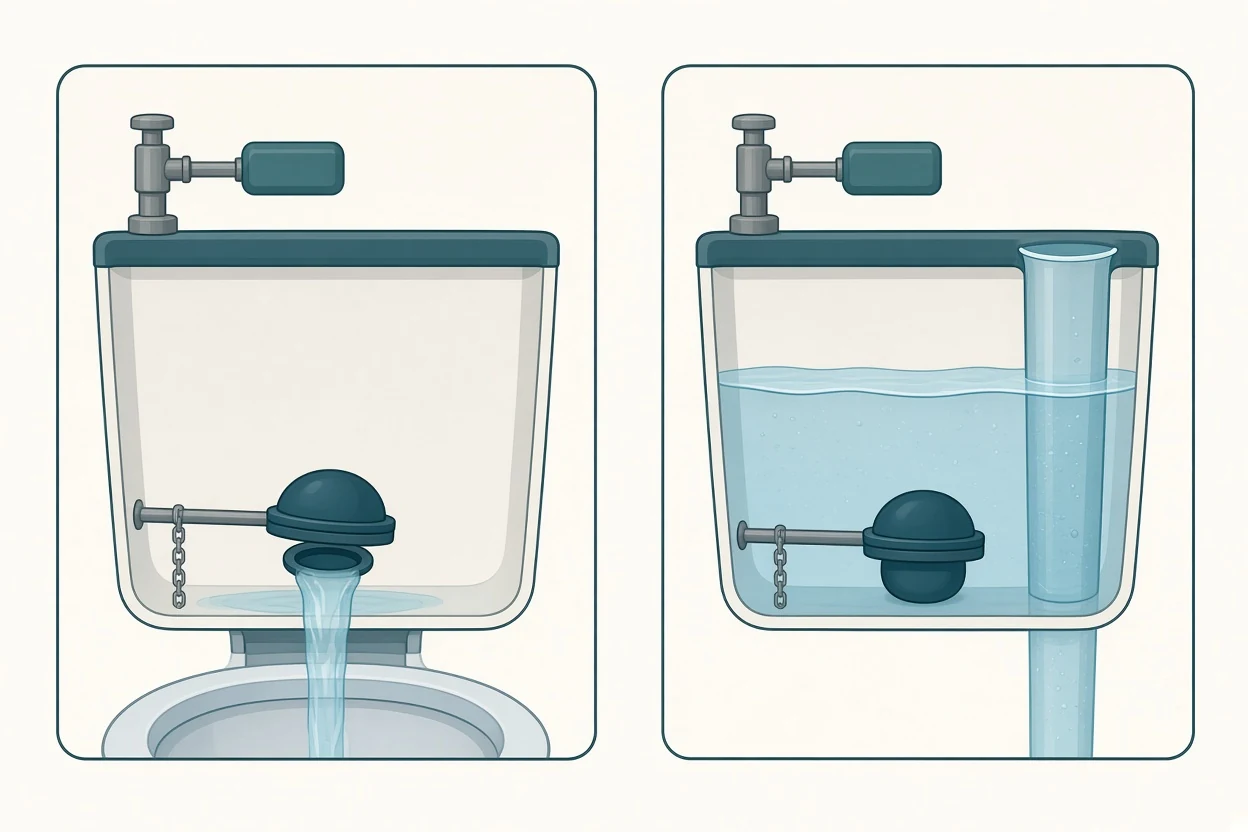
- Does the rubber flapper at the bottom settle fully over the tank outlet?
- Does its chain stay tight or get caught beneath it?
- Does the water rise high enough to spill into the open overflow tube?
- Does filling stop, then start again later without another flush?
Not every toilet uses the same parts. If your tank does not match a flapper-and-chain setup, use the toilet’s model instructions or have a plumber identify the mechanism. Do not apply a float-ball adjustment to an unfamiliar design.
When water leaks past the flapper
The flapper opens to release tank water during a flush, then closes to hold water for the next one. A worn or damaged flapper may no longer seal properly, letting water keep escaping into the bowl.
The chain can cause a similar problem even when the flapper itself looks sound. A chain that is too short can hold the flapper slightly open. Excess chain can get caught under the seal.
Look at how the chain and flapper sit at rest. A handle that needs repeated jiggling is a useful clue to report, not proof that the handle alone needs replacement.
For a less obvious leak, Roto-Rooter describes a simple dye check: add five or six drops of brightly colored food coloring to the tank, then wait 30 minutes to an hour without flushing. Color appearing in the bowl shows that water is passing from the tank into the bowl. It does not, by itself, identify which sealing part needs repair.
When the tank keeps filling too high
The fill valve brings fresh water into the tank. The float helps tell it when to stop. If water keeps spilling into the overflow tube, the float setting or fill valve may be involved.
Observe the water level and whether filling ever stops. Also note any water leaking from the top of the fill valve; the guide identifies that as a reason to replace the valve.
Before making an adjustment, check the instructions for your toilet and installed valve. The source describes a float-ball setup, but that is not a universal adjustment procedure. Avoid turning unfamiliar screws or bending parts to copy a different design.
When a plumber should diagnose it
Arrange plumbing help if you cannot identify the parts, the running returns, or a flapper replacement has not solved the leak. Roto-Rooter notes that a damaged flush-valve sealing surface can also prevent a good seal. Replacing parts one after another may miss that cause.
Use the observations above when requesting service. Add the toilet’s brand and model if available, when the problem started, and which parts have already been changed. Ask which finding supports the proposed repair before approving it.
Rooter Experts Drain Cleaning provides plumbing services in Northern New Jersey, including Moonachie, Hackensack and Clifton. Give your town when requesting service so coverage can be confirmed. Describe whether water enters the overflow tube or leaks into the bowl—that distinction gives the plumber a useful starting point.
Talk with Rooter Experts
Call Rooter Experts at (201) 583-4778 for plumbing or drain service in Northern New Jersey.