
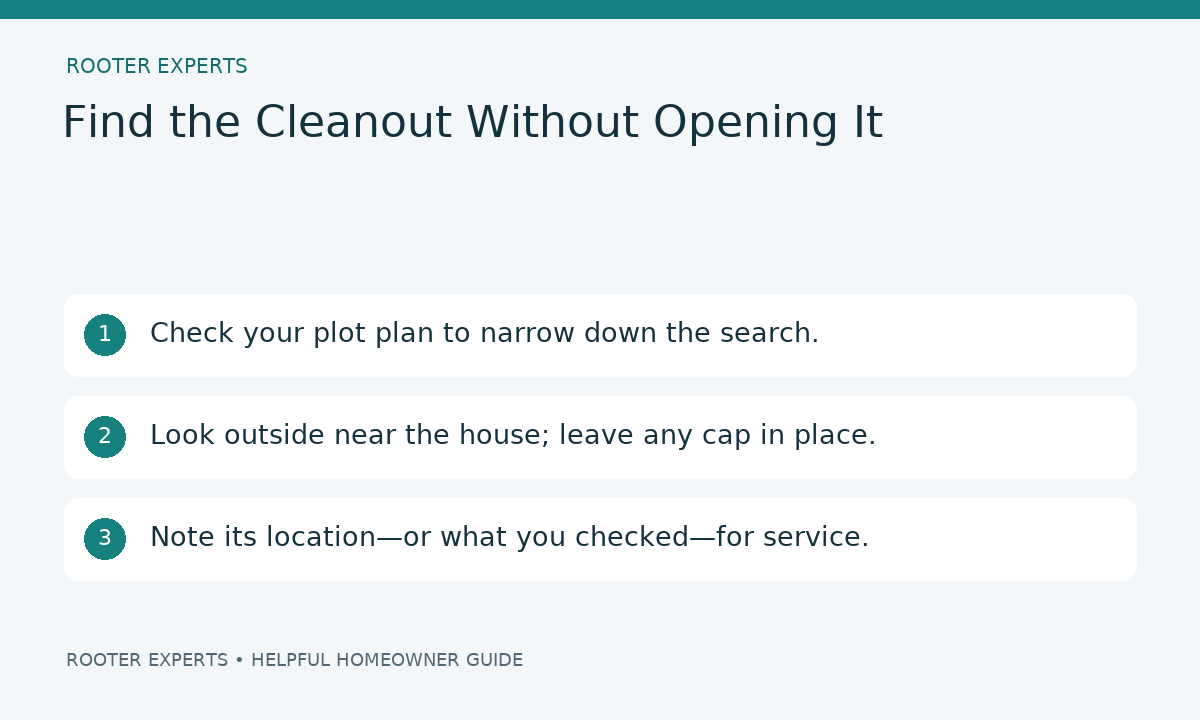
If you need to find your sewer cleanout, start with your home’s plot plan, then look for a capped pipe outside between the foundation and the street. You can also check near the side of the house closest to a bathroom. Leave the cap in place. Finding and noting the access point is useful; opening a sewer line is a different job.
Start with the plot plan
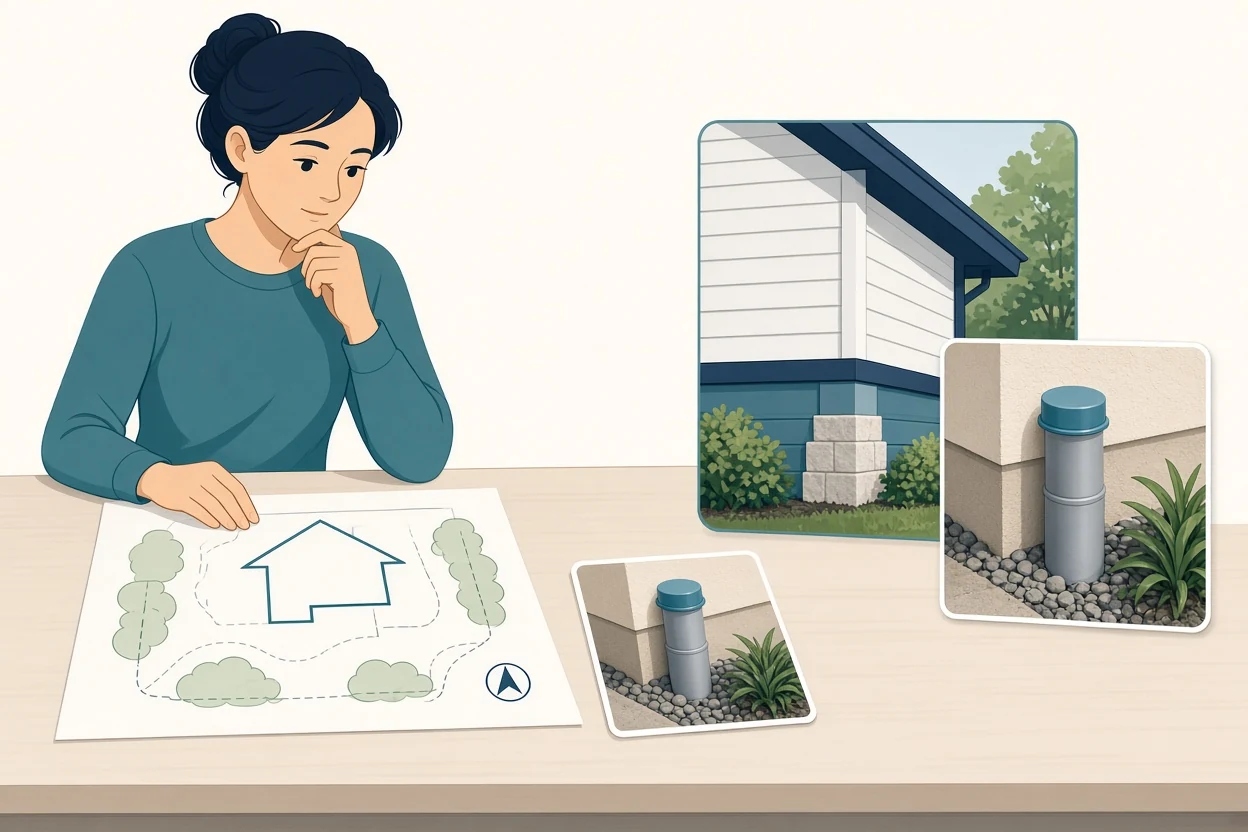
A plot plan may show the sewer service line and help you narrow your search. Roto-Rooter’s guide to sewer cleanout locations recommends starting with the home’s engineered plot plan. Follow the sewer line shown, but treat it as a guide—not a promise that the cleanout will be visible at one exact spot.
If you do not have a plan, you can still make a careful visual check. There is no need to dig or remove part of a wall just to prepare for a possible service visit.
What should you look for outside?
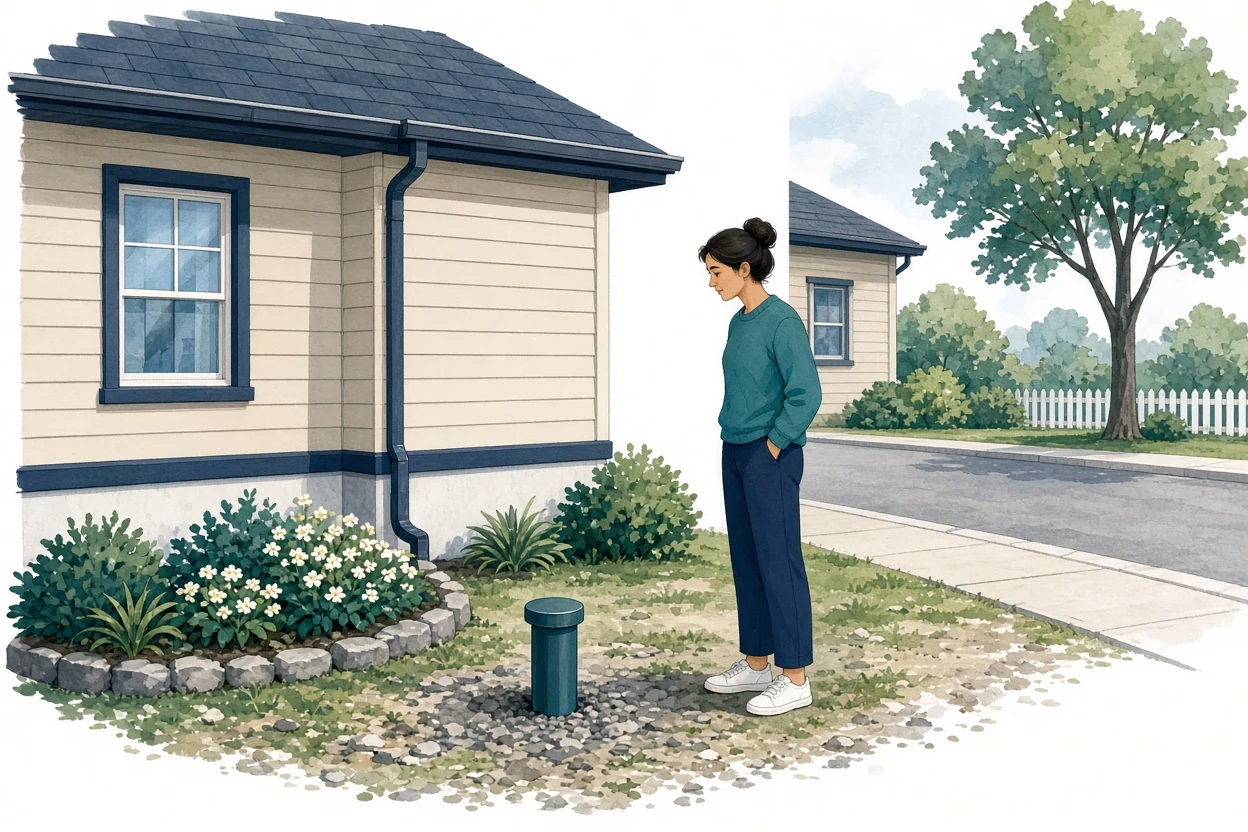
Look for a short pipe with a screw-on cap rising from the ground. A cleanout cap often has a square knob or a square recess on top. The pipe may be roughly four inches wide, though that description is not a way to identify every capped pipe. The same guide suggests checking between the foundation and the street, or along the side of the home nearest a bathroom.
Walk only where you can see safe footing. Look along accessible ground near the house, including places where plants or stored items might hide a cap. Do not move anything heavy or disturb buried pipes to search for it. If you spot a likely cleanout, note its location relative to a clear landmark, such as a corner of the house. A photo can help you point it out later.
What if you cannot find it?
Check an accessible basement for a capped pipe, but do not assume that every basement pipe is a sewer cleanout. The guide also notes that some cleanouts may be concealed behind a finished wall. Do not cut drywall or remove a cap to investigate. If you remain unsure, tell the service provider what you checked and let them locate the access point.
Finding no visible cap does not prove your home has no cleanout. It may simply be hidden or in a place you have not checked. Keep any plot plan and photos handy rather than continuing to search in unsafe or inaccessible areas.
Why note its location before a service visit?
If several drains are affected or a backup suggests a main-line problem, knowing where the access point is may help you describe the property before a visit. It does not tell you what caused the trouble or which work is needed. A technician may still need to confirm the access point and assess the line. If you want to understand one possible next step, read our guide to sewer camera inspections before underground sewer cleaning.
If water is actively backing up, stop using the affected plumbing and arrange service rather than opening the cap yourself. Keep out of any water near an outlet or electrical equipment; our basement backup electrical-safety guide explains that separate hazard.
Rooter Experts offers sewer service in its Northern New Jersey service area, including Moonachie, Hackensack and Clifton. When you request help, give your town, say which fixtures are affected, and share the cleanout location or the places you already checked. That gives the team a useful starting point without asking you to open the line.
Talk with Rooter Experts
Call Rooter Experts at (201) 583-4778 for plumbing or drain service in Northern New Jersey.