
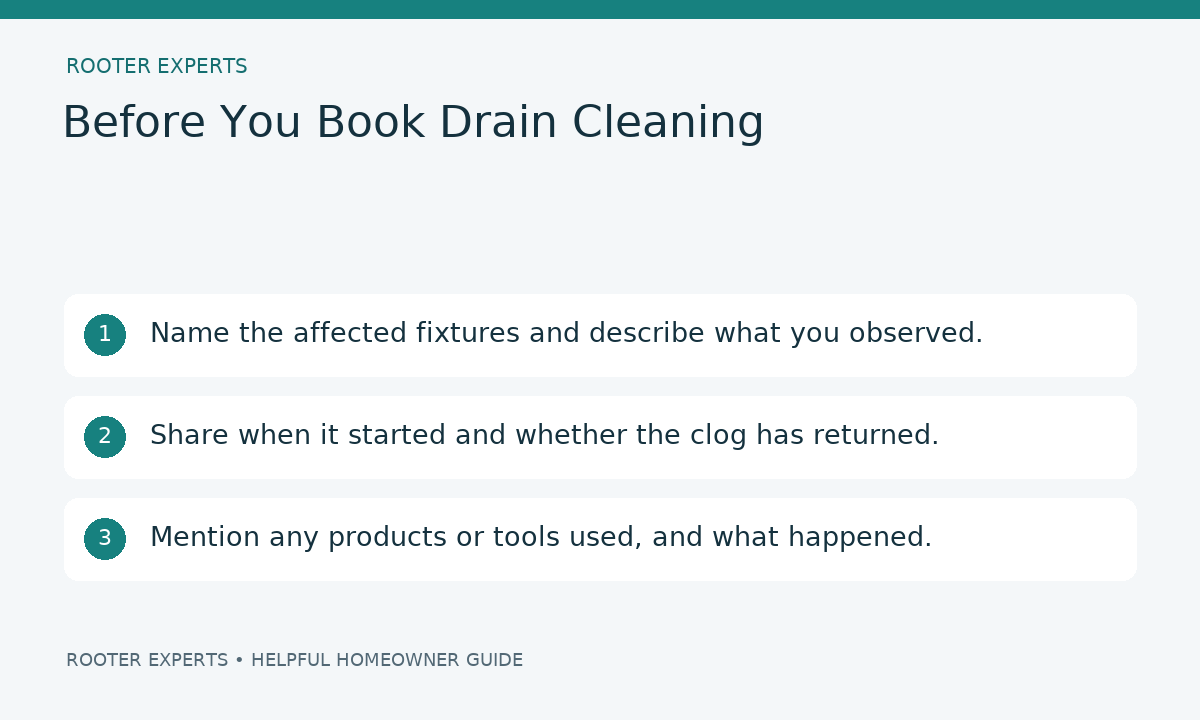
A sink will not drain, a shower keeps pooling, or water has appeared in a floor drain. Before requesting service, write down which fixtures are affected, when the trouble started, and whether it has happened before. Describe what you saw rather than guessing where the clog is.
You do not need pipe measurements or a diagnosis to make the call. A short, clear account gives the plumber a useful starting point.
Name the fixtures and describe what happened
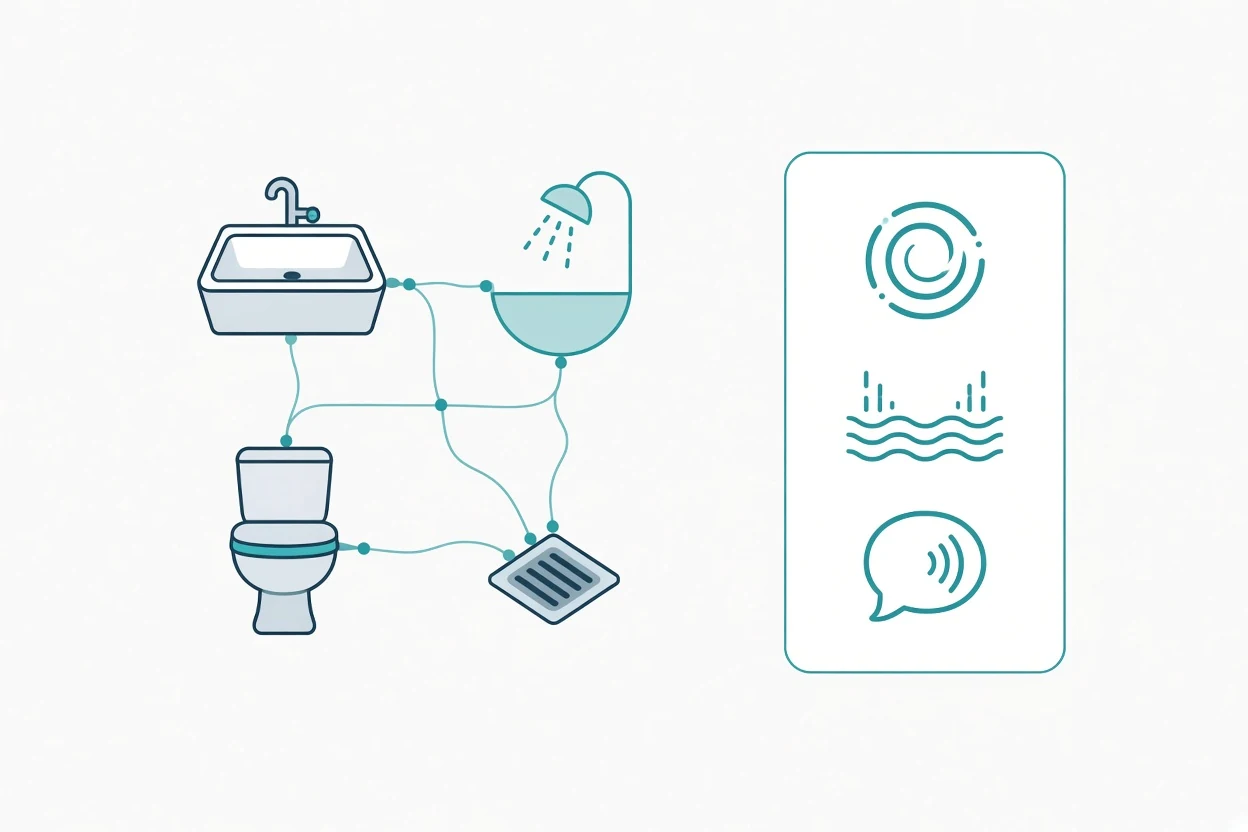
Start with the exact location: “upstairs bathroom sink” is more useful than “bathroom drain.” Then report the behavior you have already noticed:
- Does water drain slowly, stay in the fixture, or come back up?
- Is one fixture affected, or have you noticed trouble at several?
- Where did any backup appear: a sink, tub, shower, toilet, or floor drain?
- Where did you hear gurgling, and what was happening at the time?
- Is water still rising, or has the backup stopped?
Use existing observations. Do not run other fixtures just to create a test during an active backup. If you have not checked another drain, say “I do not know” rather than “everything else is fine.”
Mr. Rooter Plumbing’s drain cleaning assessment guidance says its professionals ask whether one fixture or several drains are affected. That distinction can help assess whether the problem is in a smaller drain line or may involve a larger drain or sewer line. The page also identifies recurring clogs, gurgling, and backups as possible signs of deeper trouble—not proof of a specific cause.
Give a short timeline, especially if the clog returns
Tell the plumber when you first noticed the problem and whether it began suddenly or became worse over time. An approximate date is fine.
For a repeat clog, add:
- When that drain was last cleared, if known.
- What was done, such as plunging or professional drain cleaning.
- Whether drainage improved and roughly how long that lasted.
- Whether the same fixture is affected again or the pattern has changed.
If you have an earlier service report, have it ready. Separate what the report says from what you suspect. “The drain was cleared last month and slowed again this week” gives a clearer history than “the pipe must be broken.”
Mention products and tools already used
Report any chemical drain cleaner added to the affected drain, including the product name, approximate amount, and when it was used. If you do not know, say so. These details are relevant to the work being requested.
Also mention plunging, a hand auger, or a powered drain machine. Name the tool rather than calling every attempt “snaking,” and report whether any cable or part remains in the drain.
If chemicals were used and you are considering further tool work, read the guidance on using a drain snake after chemical drain cleaner before proceeding.
Add access details and request an appointment
Once you have described the drain problem, give your town, service address, callback number, and available appointment windows. For a managed property, identify the affected unit, who can provide access, and who can approve work. Mention any known access limits without opening pipes or moving equipment to investigate.
Rooter Experts Drain Cleaning serves Northern New Jersey communities including Moonachie, Hackensack, Clifton, and Wayne. Its services include bathroom drain cleaning and main sewer line cleaning. You can describe the symptoms without choosing the cleaning method yourself.
Use this simple request, filling in only what you know:
“I’m in [town]. The [fixture and location] has been [slow, blocked, or backing up] since [time]. I’ve also noticed [other symptoms]. This [has or has not] happened before. We’ve tried [products or tools]. Water is currently [what you can see]. What appointment availability do you have?”
Contact Rooter Experts to share those details and confirm availability for your town.
Talk with Rooter Experts
Call Rooter Experts at (201) 583-4778 for plumbing or drain service in Northern New Jersey.