
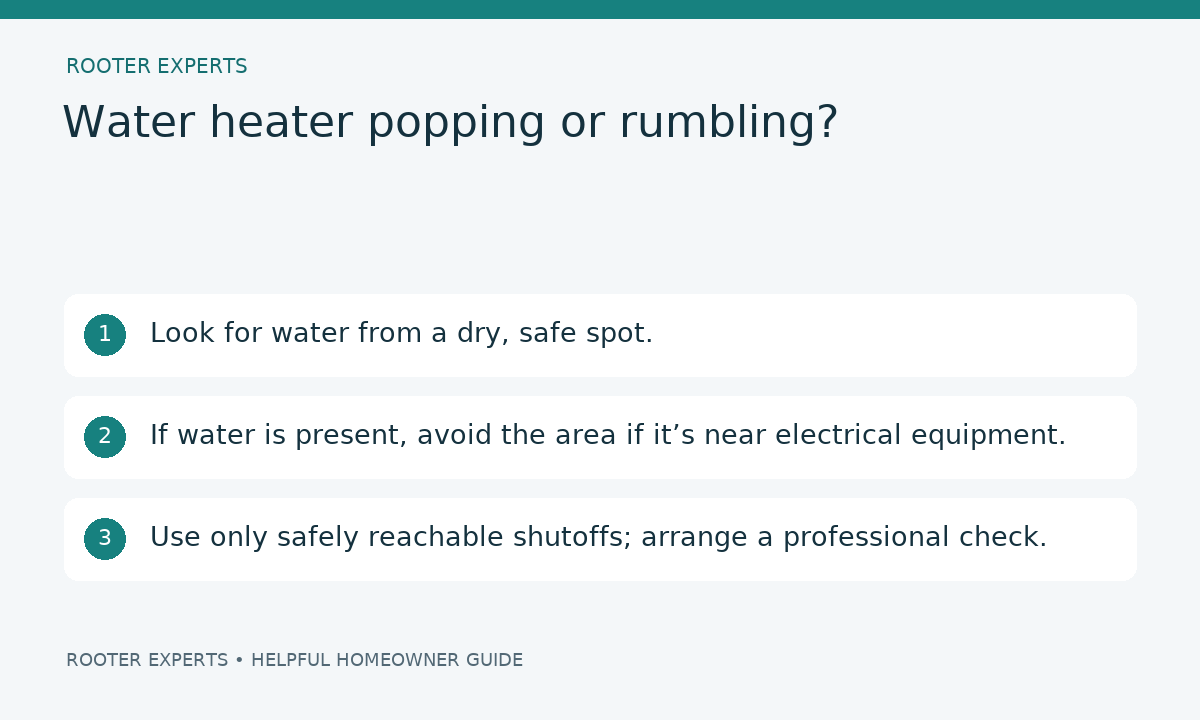
If your water heater is popping or rumbling, look around it for water before deciding what to do next. A dry area and a noise call for a service appointment. A puddle, a steady drip, or water spreading across the floor calls for prompt action to limit a possible leak.
Why a water heater may pop or rumble
Minerals can settle at the bottom of a tank-style water heater. As the heater runs, this buildup can make popping or rumbling sounds. A. O. Smith’s guide to water heater leaks says these noises are usually a sign of sediment at the bottom of the tank. It also warns that sediment can contribute to overheating, tank damage, and leaks.
The sound alone cannot tell you how much sediment is present or whether the tank is damaged. A technician needs to check the heater before recommending maintenance, repair, or replacement.

Check for signs of a leak without taking the heater apart
From a dry, safe spot, look at the floor around the heater and at any visible pipes and connections. Note whether you see a puddle, a damp patch, rust, or a steady drip. You can also note whether the hot water looks cloudy or rusty at a faucet you would normally use. A. O. Smith identifies wet spots, changes in water quality, and unusual sounds as signs worth investigating.
Do not remove covers, open valves, or try to drain the tank just to find the source of the noise. A wet floor does not tell you whether the water came from the tank, a connection, or another source. What matters now is whether water is present and whether it is spreading.
If you find water, deal with the leak first
Do not keep using a water heater that appears to be leaking. A. O. Smith advises turning off the heater’s power or gas supply and its water supply, then arranging a professional diagnosis. Only use a shutoff you can reach safely. If water is around electrical equipment, do not step into it or touch a wet switch, plug, or appliance to reach a control. Leave that area and seek help with the electrical hazard rather than crossing the water.
For more detail on what to observe and how to prepare for service, read our first steps for a leaking water heater. If the floor is dry but the sound is new, growing louder, or recurring, arrange a water-heater check rather than waiting for a leak to appear.
What to tell the service team
Share what you noticed: whether the sound is popping or rumbling, when you hear it, whether there is visible water, and whether the hot water has changed. If you know the heater’s make and model, have those details ready. These observations help the technician start with the right problem; they do not replace an inspection.
A. O. Smith lists flushing as a common maintenance task for sediment, but the right next step depends on the heater’s condition and its manufacturer’s instructions. Ask the technician to explain what they found and why they recommend a particular service before work begins.
Rooter Experts offers water heater repair, installation, and replacement service in its Northern New Jersey service area, including Moonachie, Hackensack, Clifton, and Wayne. Tell the team your town and the observations you have already made when you request service.
Talk with Rooter Experts
Call Rooter Experts at (201) 583-4778 for plumbing or drain service in Northern New Jersey.