
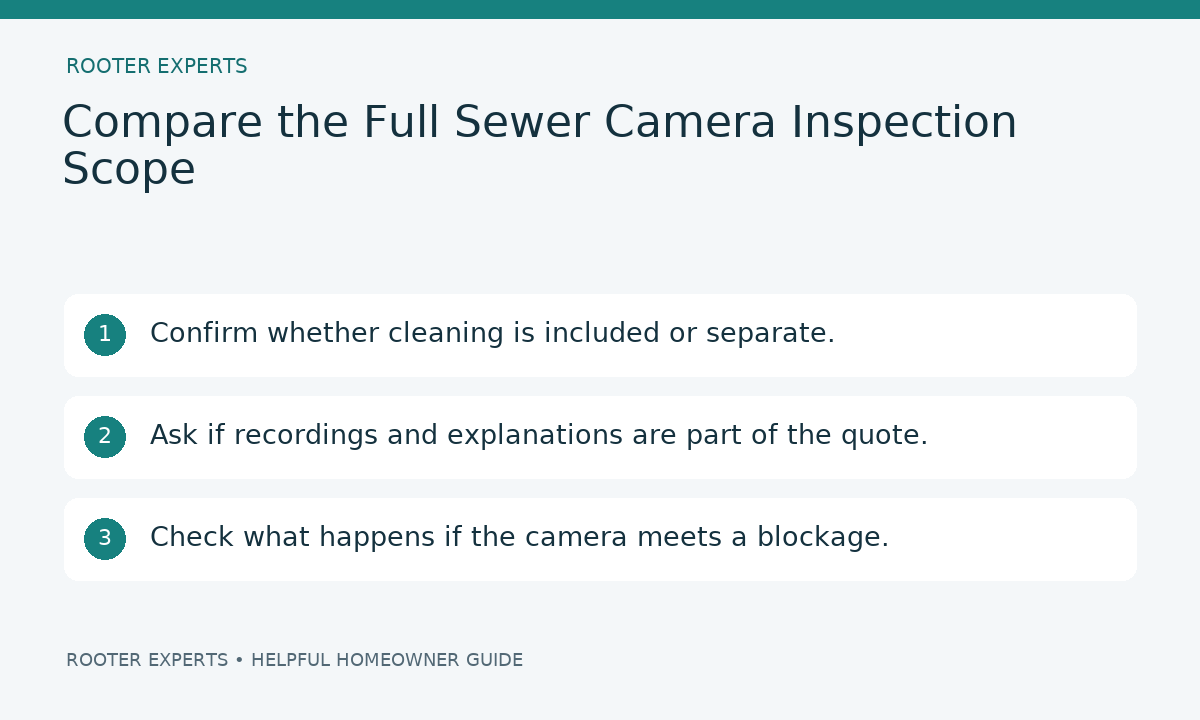
For a sewer camera inspection in NJ, ask for a written quote for your property that separates the inspection from any cleaning or repair. Two prices may cover different work: one could include a recording and locating the trouble spot, while another covers only the camera pass.
Rooter Experts offers sewer camera inspection in New Jersey. Use the questions below to explain your problem and compare estimates before booking.
What can change the work involved?
The technician needs an access point and a path through the pipe. Tell the provider whether you know where the sewer cleanout is and which line needs attention. Ask whether the estimate includes the work needed to reach that line.
A blockage may prevent the camera from reaching the section you want checked. Cleaning and inspection serve different purposes: cleaning removes material from the pipe; a camera helps show its condition. The RIDGID SeeSnake camera manual (PDF) explains that the camera is a diagnostic tool and should not be used to clear an obstruction. Do not assume that a camera visit includes drain cleaning.
Five questions to ask before approving the estimate
- Which line and access point does this quote cover? Be clear about whether you are booking a check of one drain or the main sewer line.
- What happens if the camera cannot pass a blockage? Ask how any cleaning would be priced and whether the quote includes another camera pass afterward.
- Is locating the problem included? If a repair may be needed, ask whether the technician can mark the suspected trouble spot and whether that is a separate service.
- What will I receive? Confirm whether the visit includes a review of the findings, a video file, still pictures, or a written summary.
- How will added work be approved? Ask to see the scope and price of any proposed extra service before authorizing it.
Put the answers beside each quote. A lower total is easier to judge once you know whether the providers are offering the same work.
Give the provider a clear description of the problem
Before calling, note:
- Where it happens: a single sink, a toilet, the basement floor drain, or several fixtures.
- When it happens: during normal water use, after laundry, or soon after a previous cleaning. Mention gurgling, slow drainage, or water coming back up.
- What has already been tried: snaking, cleaning, or a chemical drain product. Keep the product label if you have it, and do not mix in another cleaner.
If several fixtures are affected, this guide to main sewer line clog symptoms can help you describe the pattern. Symptoms help explain the problem; they do not confirm its cause.
If sewage is actively backing up, stop using fixtures and appliances that feed the affected system. Keep children and pets away. Stay clear of electrical equipment near the water, and tell the provider about the active backup when calling.
Use the footage to understand the next step
Ask the technician to show where the suspected problem appears and explain what is visible. Roots, buildup, or signs of damage may help guide a recommendation. Standing water or debris can limit the view, so ask which sections could not be inspected clearly.
Before approving a repair, ask how the footage supports it and whether any further checks are needed. If cleaning is recommended, ask why that method fits the line. Our guide to hydro jetting versus snaking explains how those options differ.
Talk with Rooter Experts
Call Rooter Experts at (201) 583-4778 to discuss your drain problem.