
If several fixtures are backing up or sewage is appearing at a low drain, stop using water where practical. Do not run more fixtures just to test the problem. A sewer camera inspection may be the safest and most useful first step before a cleaning tool enters an underground line.
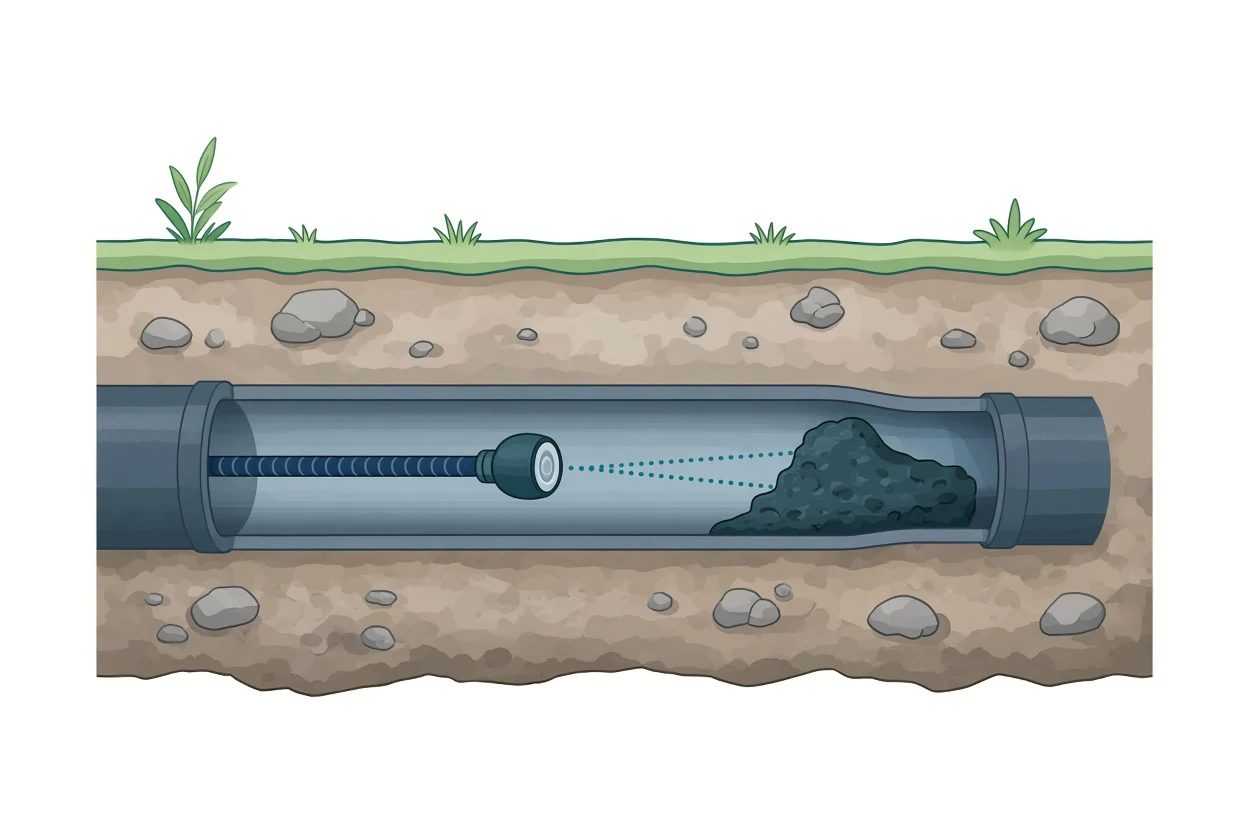
The camera does not clear the blockage. Its job is to help identify the sewer lateral’s condition and the source or location of the obstruction. The sewer lateral is the underground pipe connecting your home to the main sewer line.
What the camera can answer before cleaning
A blocked sewer line tells you that flow has stopped. It does not tell you where the obstruction is or what condition the line is in.
A camera inspection may help the service provider answer practical questions such as:
- How far can the camera travel through the line?
- Where does the visible obstruction begin?
- What does the accessible part of the sewer lateral look like?
- Which access point appears suitable for the next step?
- Does the planned cleaning method still make sense after the inspection?
These answers can guide the cleaning plan instead of sending equipment into the line with little information. Ask the technician to explain what is visible and what remains uncertain. A camera view should support the next decision, not replace a clear explanation.
Why inspection can matter for underground safety
Underground sewer work has a concern that is easy to miss: other buried utility lines may be nearby.
PSE&G warns that sewer-cleanout tools can become misdirected and contact buried utility lines. The utility advises using a camera before work to identify the condition of the sewer lateral and the source of the obstruction. This is one reason a contractor may recommend a sewer camera inspection before trying to clear the line.
The inspection does not promise that every buried hazard will be visible. Its purpose is to collect useful information before cleanout equipment is used. If excavation later becomes necessary, PSE&G says underground utilities must be marked first through New Jersey’s Call Before You Dig service at 811 or 1-800-272-1000.
What the service order may look like
The exact order depends on what can be safely observed and reached. A reasonable service discussion may include these stages:
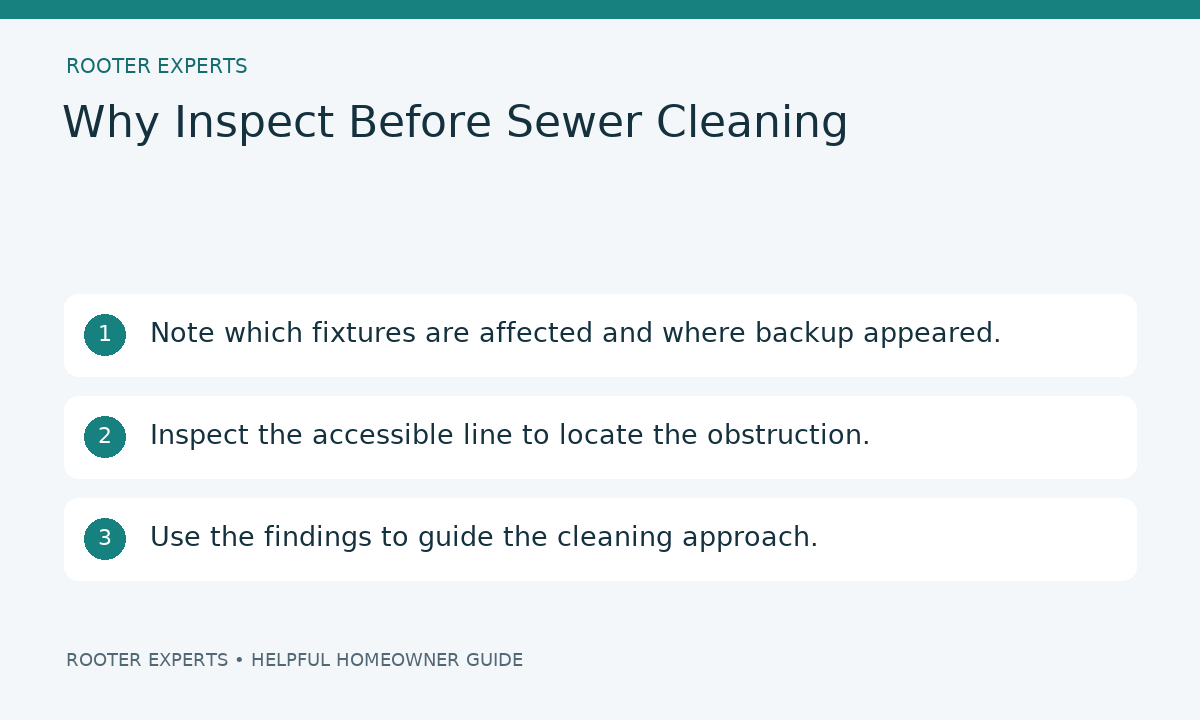
- Review the symptoms. Note which toilets, sinks, tubs or floor drains are affected and where the backup first appeared.
- Locate usable sewer access. The technician determines where an inspection or cleaning tool may enter the line.
- Inspect the accessible line. A camera is used to look for the obstruction and review the visible condition of the sewer lateral.
- Choose the cleaning approach. The findings help guide the next step rather than treating every underground blockage the same way.
- Review the result. Ask whether a camera pass after cleaning is part of the work and what the technician will document.
Sometimes the first camera pass may not answer every question. Ask how far the camera traveled, what stopped it and whether another inspection is planned after flow is restored.
Act immediately if you suspect a gas leak
Stop work if you notice a rotten-egg odor, hissing, or other signs of a possible gas leak. Do not investigate or use electrical devices near the suspected leak. Leave the area immediately. PSE&G advises moving at least 350 feet away before calling 911 or your gas utility. If PSE&G supplies your gas, its emergency number is 1-800-880-7734.
If gas piping is damaged during excavation, move away, call 911 immediately, then notify the gas utility. Wait for responders’ clearance before returning. Our gas-odor safety guide explains the precautions in more detail.
What to share when arranging service
You can help the service provider plan without touching wastewater or opening the sewer yourself. Share:
- Which fixtures are slow, blocked or backing up
- Where water or sewage first appeared
- Whether the level is still rising
- When the problem began
- Whether similar backups have happened before
- Whether anyone has already used a hand tool, powered machine or drain chemical
- Where the known sewer access points are located
If a drain chemical was used, name the product and when it was added. Leave the affected fixtures unused so the service provider can account for possible exposure.
Rooter Experts provides sewer camera inspections and sewer services in Northern New Jersey, including towns in Bergen and Passaic Counties such as Hackensack, Paramus, Clifton and Paterson. When requesting service, give your town and describe the affected fixtures so coverage and the appropriate next step can be confirmed.
Talk with Rooter Experts
Call Rooter Experts at (201) 583-4778 for plumbing or drain service in Northern New Jersey.