
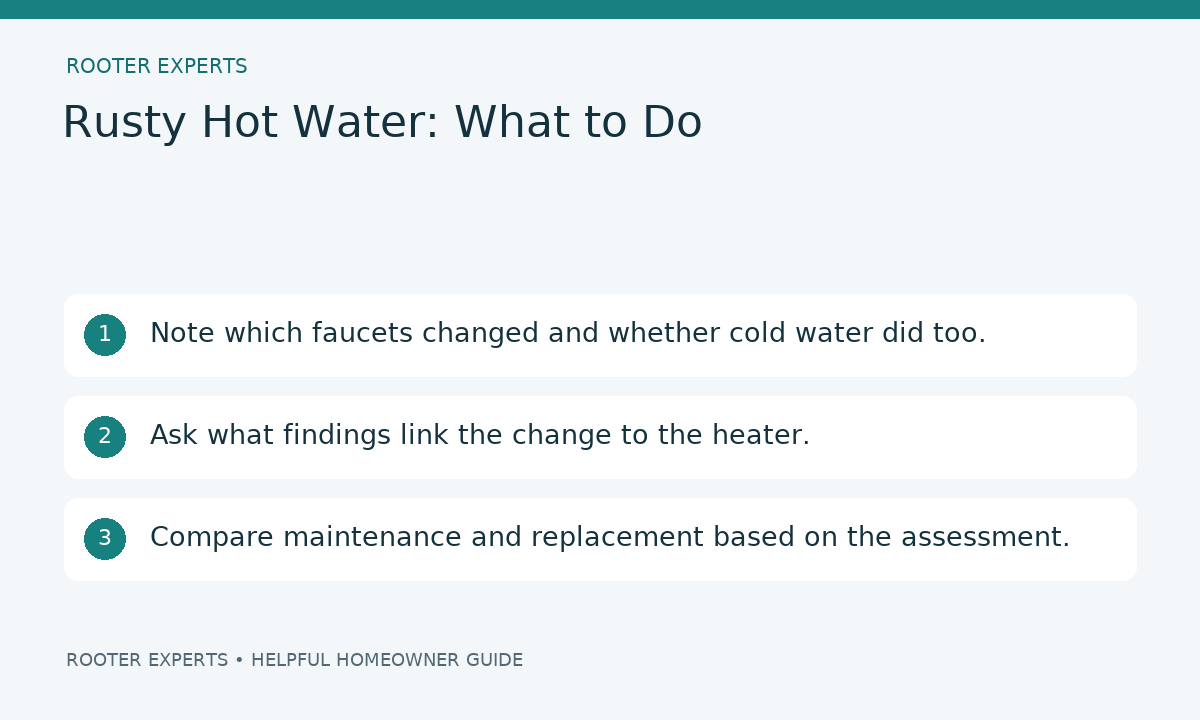
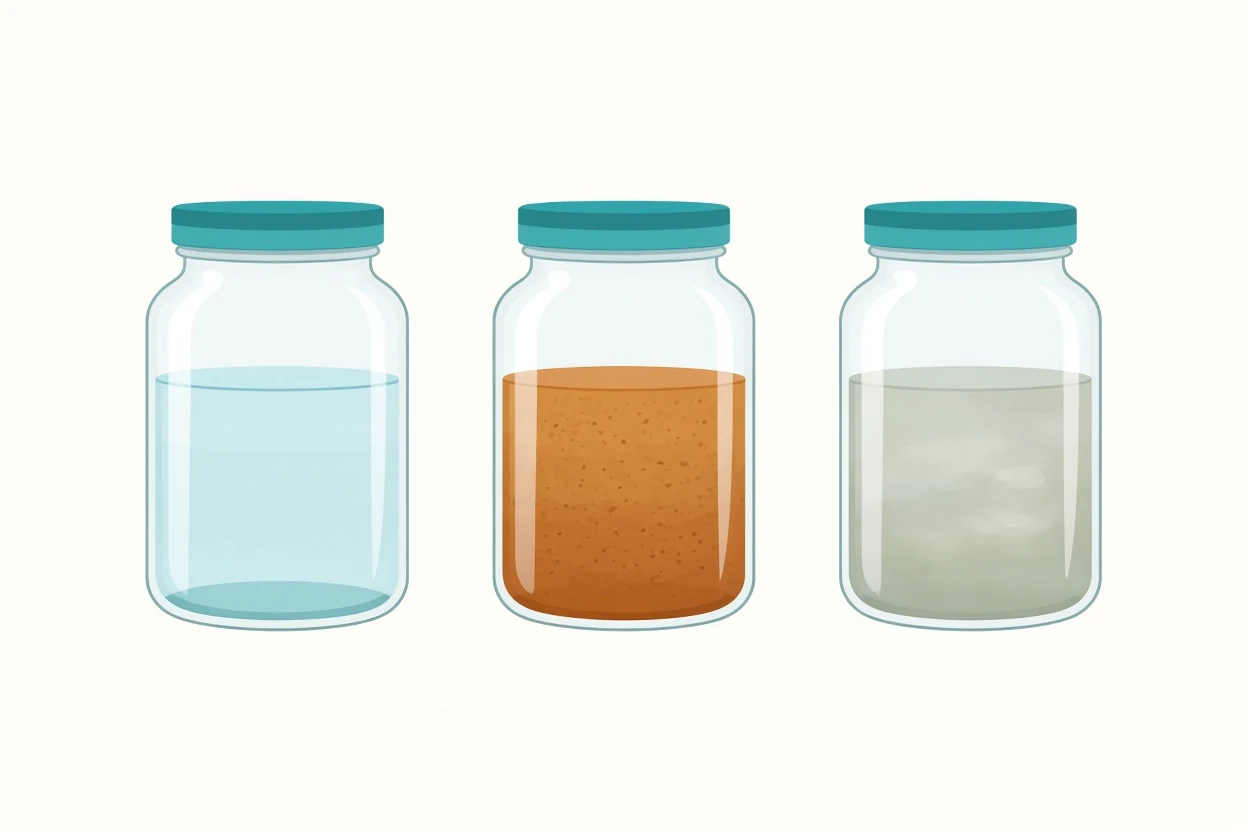
Rusty hot water is a reason to arrange a water-heater assessment—not proof that you need a new heater. Note when the change started, which faucets are affected, and whether you have already noticed the same change in cold water. Those details give the professional a clearer starting point than color alone.
A.O. Smith’s water-heater warning signs and leak guidance says rust, cloudiness or a metallic smell can indicate sediment buildup or corrosion inside a tank. These changes can signal a need for maintenance or replacement soon. The key word is can: appearance alone does not establish the cause or the right repair.
Record the change without taking the heater apart
Before requesting service, make a short note of what you have observed during normal use:
- Does the water look rusty, cloudy or both?
- Have you noticed a metallic smell?
- Has the change appeared at one faucet or several?
- Have you noticed it in hot water only, or in cold water too?
- Is it constant, or does it come and go?
- Have you also noticed reduced hot-water performance, unusual sounds or visible moisture near the heater?
Report what you know; you do not need to run every fixture to build a complete record. Do not touch hot water to judge its temperature or open the heater to look for rust. Read the model label only if it is safely accessible.
If the heater is also leaking, treat that as a separate urgent problem. A.O. Smith advises against continuing to use a leaking unit. See our safe first steps for a leaking water heater. Stay clear of water near electrical equipment; do not reach through it to inspect the heater or operate a shutoff.
What the assessment should establish
Ask the professional to explain where the water-quality change is coming from before recommending work. Useful questions include:
- What findings connect the discoloration to the heater?
- Is sediment buildup suspected, or is there evidence of corrosion?
- Is the tank damaged, or does a serviceable component need attention?
- How do the heater’s age, condition and maintenance history affect the recommendation?
This separates a symptom from a diagnosis. “The water looks rusty” describes the problem. A service recommendation should explain what was found and why the proposed work fits those findings.
When maintenance may fit—and when replacement may fit
A.O. Smith’s maintenance guidance includes flushing to remove sediment and checking the anode rod. The anode rod is a part that corrodes to help protect the tank from rust. Ask whether those tasks are appropriate for your model and its present condition; do not assume a flush will solve every water-quality change.
The same guide says a cracked tank typically requires replacement and that tank corrosion causing leaks cannot be repaired. That is different from rusty-looking water without a confirmed tank problem.
Before approving replacement, ask the professional to identify the damage or condition that makes maintenance unsuitable. Before approving maintenance, ask what improvement is expected and what follow-up would be needed if the discoloration remains. Neither choice should rest on water color alone.
Request water-heater service with a clear starting point
Rooter Experts Drain Cleaning offers water-heater repair, installation and replacement for homeowners in Northern New Jersey, including Moonachie, Hackensack and Clifton.
When requesting service, share the observations above and give your town. Add the heater’s model, approximate age and any known maintenance history if available. Ask for the assessment findings and proposed scope in writing before approving work. The useful next step is a clear explanation of the cause—not choosing a new heater before the existing one has been assessed.
Talk with Rooter Experts
Call Rooter Experts at (201) 583-4778 for plumbing or drain service in Northern New Jersey.