
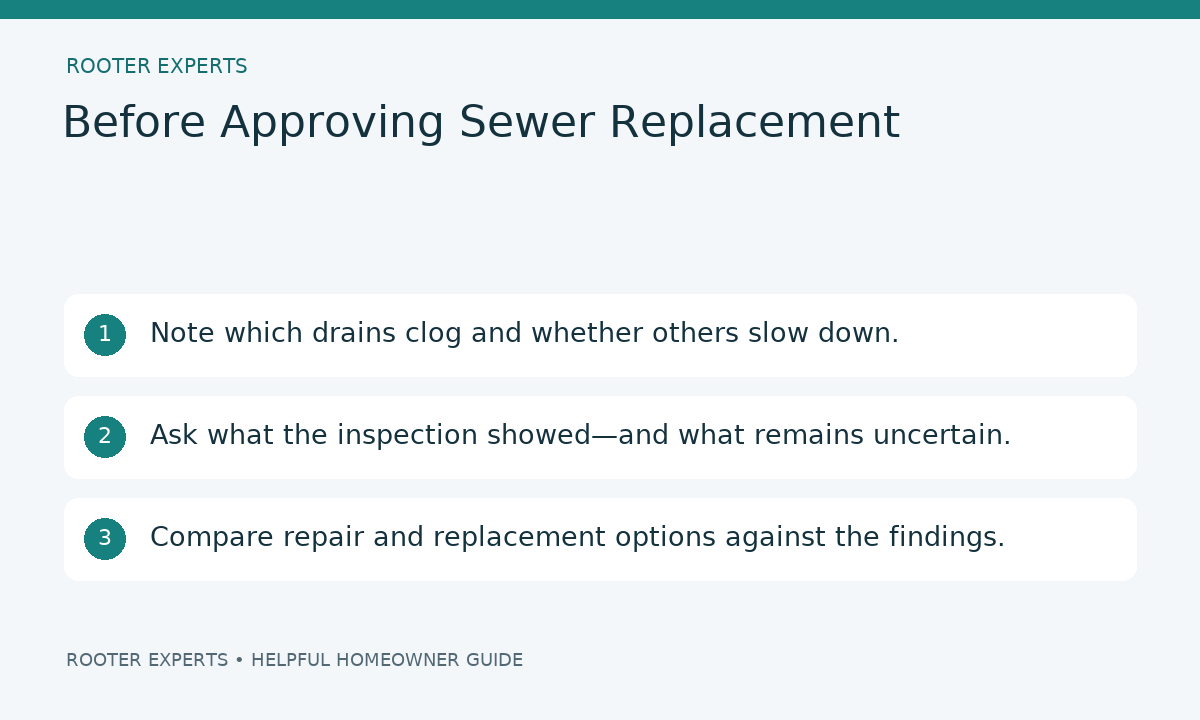
If your drain keeps clogging and someone recommends replacing the sewer line, ask what finding supports that recommendation. Repeat clogs deserve a closer look, but they do not, by themselves, prove the pipe needs replacing.
Mr. Rooter’s residential drain-cleaning guidance explains that recurring clogs can point to deeper buildup or a larger drain or sewer issue. It also notes that removing only part of a blockage may leave the same drain slowing down again. Pipe damage and root intrusion may call for further evaluation, repair or replacement—not an automatic replacement decision based on symptoms alone.
Separate the symptom from the cause
“The drain clogged again” describes what happened. Before approving major work, ask the technician to explain why it happened.
Start with observations you already have:
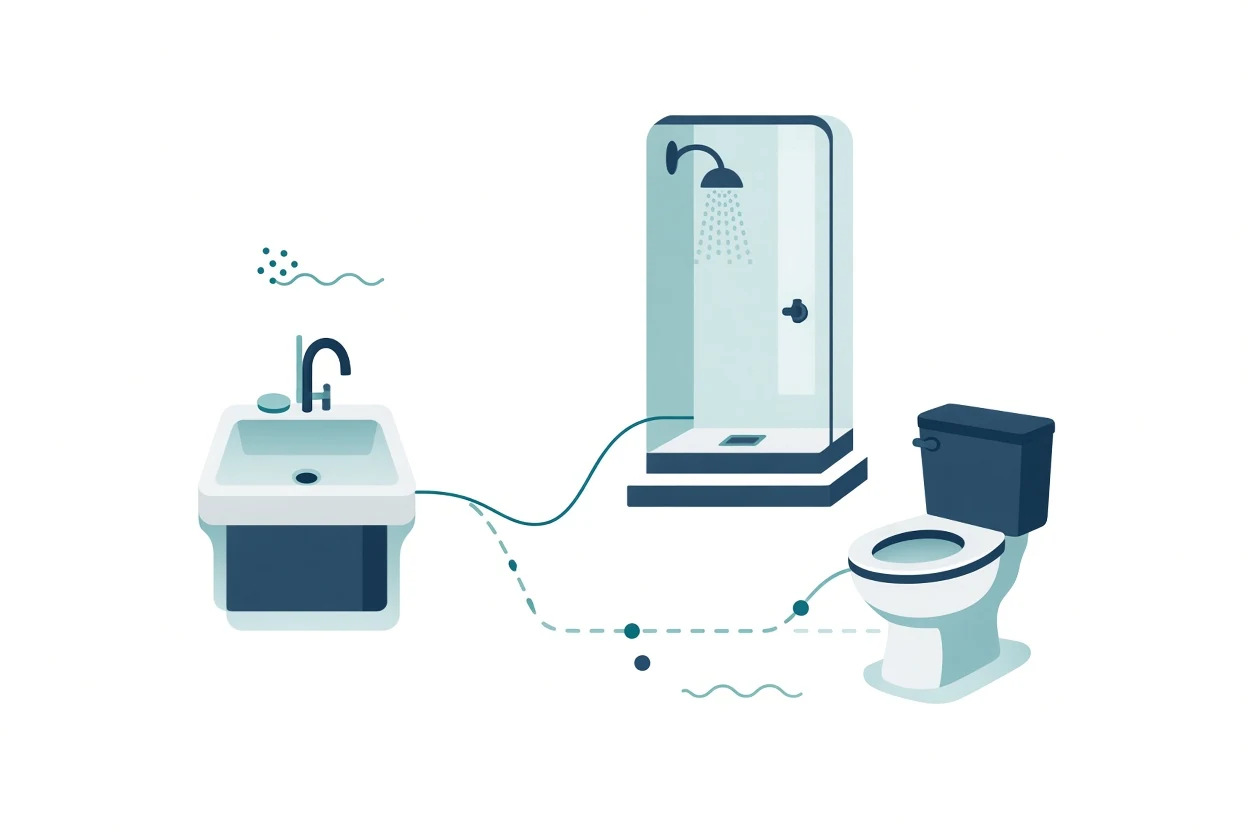
- Which fixture clogged, and was it the same one each time?
- Were other drains slow or backing up at the same time?
- Did you hear gurgling or see water come up through another drain?
- What work was done before, and how long did drainage improve?
The same Mr. Rooter guidance says a single affected fixture may suggest a nearby drain problem, while multiple slow drains or backups may involve the main drain or sewer line. These are clues about where to investigate, not proof of pipe damage.
Do not run more fixtures just to create a test during an active backup. If backup water is near electrical outlets or equipment, keep clear and follow the basement backup electrical-safety guidance before dealing with the drain.
Ask what the inspection actually showed
A recommendation should connect the blockage location, the observed pipe condition and the proposed work.
Mr. Rooter explains that a video inspection may help identify the location and cause of a recurring problem. Ask to review the findings in plain language:
- Where is the blockage: near the fixture, in a branch drain or in the main sewer line?
- What was observed: buildup, roots, pipe damage or something still uncertain?
- Which parts of the line were inspected, and what remains unexamined?
- Can the technician show the footage or images that support the recommendation?
- Is more evaluation needed before choosing the final scope?
Do not treat “we recommend a camera” as the diagnosis itself. Ask what the inspection is meant to resolve. Rooter Experts’ sewer camera inspection service page is a useful starting point for discussing an assessment.

Match the next step to the findings
Cleaning, further inspection and pipe work answer different problems. Ask why the proposed option fits yours.
When buildup is the concern
The cited guidance describes grease, soap residue, hair and other debris narrowing the pipe opening. It says more thorough cleaning may help when earlier work removed only part of the blockage.
Ask what material needs removing and why the chosen method suits the pipe’s condition. For tougher buildup, the guide describes high-pressure water cleaning as an option. You can discuss suitability through Rooter Experts’ hydro jetting service page; recurring clogs alone are not a reason to choose that method without an assessment.
When damage or roots are suspected
Ask what was actually seen and whether it supports further evaluation, repair or replacement. A suspected problem and a confirmed finding should be clearly distinguished.
Useful questions include: “Why would cleaning not address this problem?” and “Why is replacement recommended instead of repair?” Ask the technician to explain any limits of the alternatives, rather than assuming the smallest or largest job is right.
Review the proposed scope before approving it
Request a written proposal that identifies the section to be worked on and explains how that scope relates to the findings. If the recommendation is to replace the whole line, ask why a smaller repair would not address the observed problem.
Also confirm what the proposal includes, what further findings could change it and how any added work would be approved. For secondary estimate questions, use the sewer camera inspection quote guide.
If the explanation remains unclear, seek another assessment and share the existing report, footage and previous service records.
Bring the findings to a local assessment
Rooter Experts provides sewer cleaning and repair services for homeowners and property managers in Northern New Jersey communities including Moonachie, Hackensack and Clifton.
When requesting an assessment, give your town and share the observations collected above, along with any replacement proposal. State whether a backup is active now. The useful next step is a recommendation tied to the pipe’s observed condition—not simply another clog on the calendar.
Talk with Rooter Experts
Call Rooter Experts at (201) 583-4778 for plumbing or drain service in Northern New Jersey.