
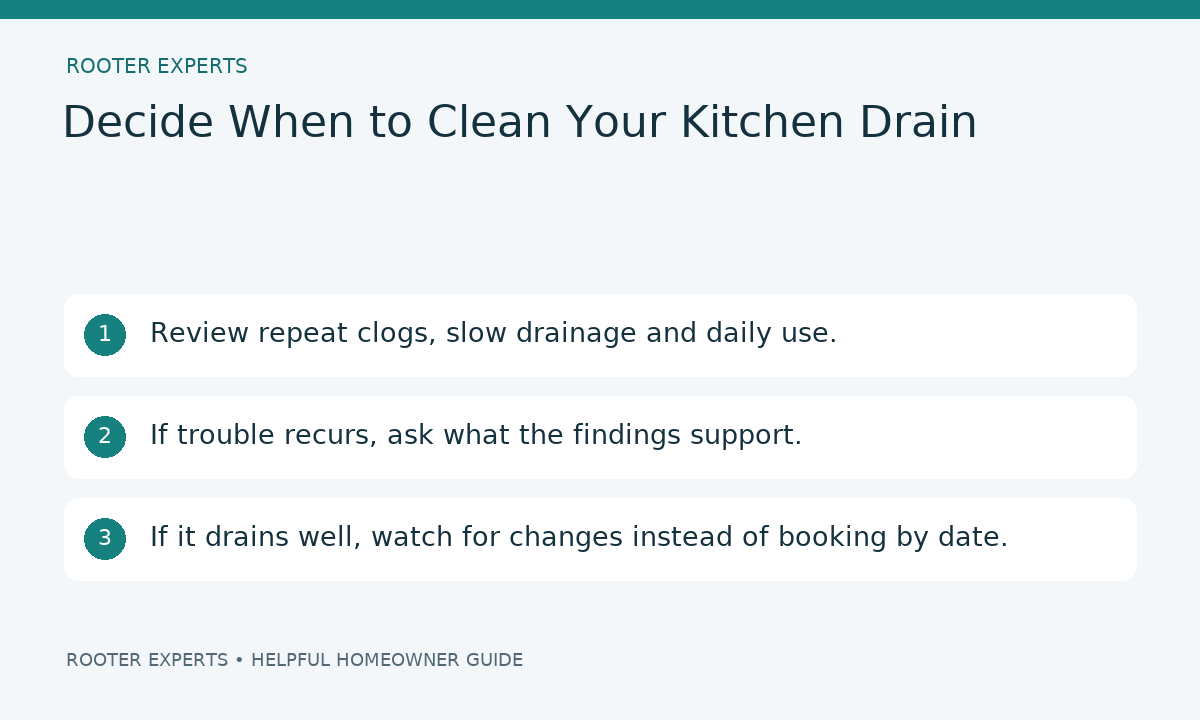
If your kitchen sink drains well, you do not need to book cleaning just because another year has passed. Start with its history: has it clogged repeatedly, slowed down between service visits, or handled heavy daily use? Those details are more useful than a fixed calendar rule.
Preventive kitchen drain cleaning may fit a home with frequent clogs or heavy use. For a sink with no recurring trouble, watching for changes and arranging service when needed may be enough.
There is no single cleaning interval for every kitchen
Mr. Rooter Plumbing explains in its residential drain-cleaning FAQ that a suitable schedule depends on plumbing age, household size and drain use. Homes with frequent clogs or heavy use may benefit from periodic cleaning, while others may need service only when issues arise.
That makes a yearly appointment a question to discuss, not a rule for every home. Ask what makes the proposed interval suitable for your kitchen. A useful recommendation should connect to your drain’s history, use and condition.
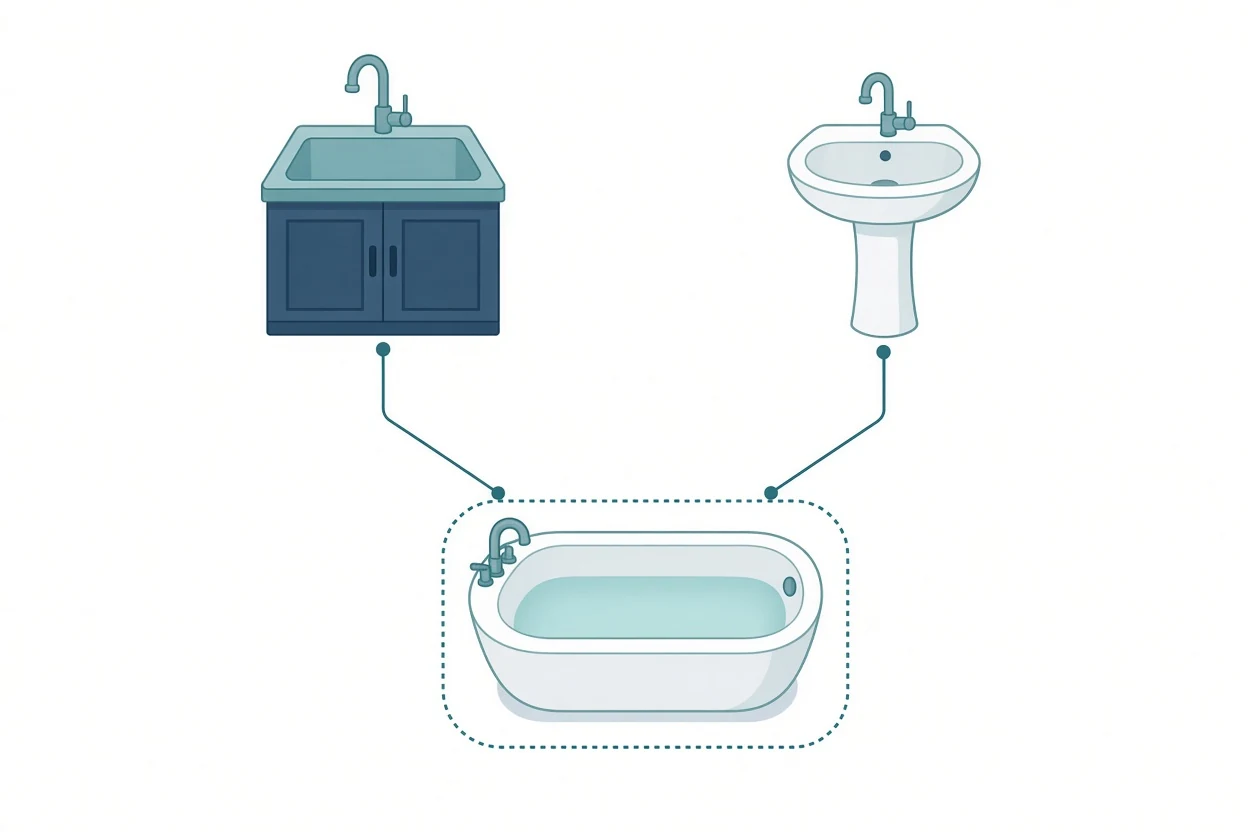
Keep the discussion focused on the kitchen drain line. Planning maintenance for one kitchen sink is a separate decision from cleaning every fixture or scheduling main sewer work.
When preventive cleaning is worth discussing
Consider a maintenance visit if the kitchen drain has a pattern of trouble, even when water is moving today. Before calling, make a short record:
- Note when the sink last clogged and how often it has happened.
- Find any previous service notes describing what was found or cleaned.
- Describe household size and how heavily the kitchen is used.
- Record whether drainage returned to normal after the last service and how long that lasted.
The same drain repeatedly slowing down deserves attention to the cause, not just another appointment on the calendar. The drain-cleaning page explains that removing only part of a blockage may leave buildup behind, and recurring clogs may call for further assessment.
Ask the service professional whether periodic cleaning fits the findings or whether the recurring problem needs a different next step. Maintenance should follow an explanation of the problem rather than replace one.

When watching the drain may be enough
If the sink drains normally, has no repeat-clog history and has no known unresolved problem, you can discuss an as-needed approach instead of committing to routine cleaning.
Watching does not mean waiting for a complete blockage. During normal kitchen use, notice whether water starts taking longer to leave the sink. Keep a brief note of changes so you can describe a pattern rather than rely on memory.
For property managers, keep that record by kitchen or unit. Dates and past service findings make the maintenance discussion more specific. Avoid treating one kitchen’s clog history as a reason to put every kitchen on the same schedule.
New symptoms change the decision
Once the sink is slow, clogged or backing up, the question is no longer only about prevention. It is time to describe the current problem and ask about service.
Mr. Rooter’s guidance notes that one affected fixture may point to a nearby drain issue, while multiple slow drains or backups may involve a larger line. Report what you have already noticed elsewhere in the home; you do not need to run other fixtures to test them.
If water is actively backing up into the kitchen sink, stop adding water to that sink and arrange help rather than waiting for a routine maintenance date. For questions about the scope of work, see our guide to cleaning every drain versus just the affected one.
Turn your drain history into a service plan
Use the observations above to ask one focused question: does this kitchen need cleaning now, a tailored maintenance schedule, or service only if problems develop?
If periodic cleaning is recommended, ask what findings support it and when to review the interval. After any visit, keep the service notes with your clog record. That gives you something concrete to use at the next review.
Rooter Experts Drain Cleaning provides kitchen drain-cleaning services in Moonachie, Hackensack, Clifton and nearby Northern New Jersey communities. When requesting service, give your town and share your drain history. If a chemical drain cleaner was used recently, include the product name and when it was added so the team can plan the drain work.
The goal is a schedule that fits your kitchen—not an automatic cleaning date with no reason behind it.
Talk with Rooter Experts
Call Rooter Experts at (201) 583-4778 for plumbing or drain service in Northern New Jersey.