
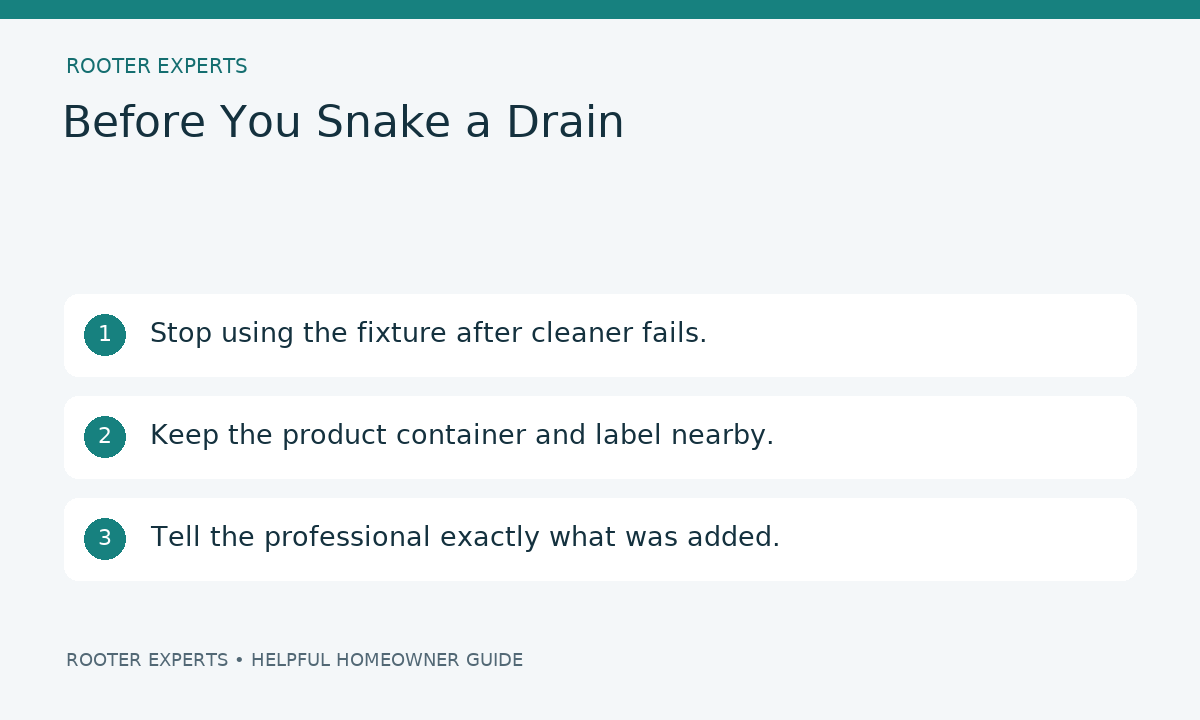
If chemical drain cleaner did not clear the clog, stop using the fixture. Do not pour in another product or force a drain snake into water that may still contain cleaner. Moving a cable through that water can splash it onto your skin, eyes, clothing, or nearby surfaces.
There is no single safe waiting time for every drain product. Ingredients and label directions vary. Keep the container nearby, close the area to children and pets, and arrange an evaluation if the drain remains blocked.
If cleaner gets on skin or in eyes, is swallowed, or causes symptoms from fumes, seek immediate help from Poison Control. In the U.S., call 1-800-222-1222. Do not wait for a drain-service visit to address an exposure.
What to do right now
Take these steps before touching the drain again:
- Stop running water into the clogged sink, tub, or shower.
- Do not add another cleaner, bleach, vinegar, baking soda, or any other product.
- Keep your face and hands away from the drain opening.
- Do not plunge the drain. Plunging can push chemical-laced water out of the fixture.
- Leave the product in its original container and save the label.
- Follow the product label if it gives specific spill, exposure, or first-aid directions.
If the affected sink has a garbage disposal, do not put your hand or a tool inside it. Do not touch a plug or electrical switch with wet hands or while standing in water. If electrical equipment is near spilled or backed-up water, stay out of the wet area rather than trying to disconnect it.
For more background on the products involved, see how chemical drain cleaner works.
Why snaking after drain cleaner is risky
A hand auger works by feeding a flexible cable into a drain. Even careful turning can move standing water and residue around the opening. A powered drain machine moves a longer cable with much more force and should not be treated like a simple hand tool.
The chemical also may not have removed the actual blockage. It might have opened a small path, softened part of the material, or remained trapped above a firm obstruction. Repeated chemical use can damage some plumbing materials and may not remove the buildup causing the clog, according to Mr. Rooter’s drain-cleaning guidance.
Do not try to solve the problem by pushing harder. Force can lodge the cable, make retrieval difficult, or leave you with both a stuck tool and chemical in the line. If a cable is already trapped, stop and follow this guide on what to do when a drain snake gets stuck.
Can you snake it after waiting?
Do not assume that waiting a few minutes or hours makes the drain safe to snake. The answer depends on the exact product, how much was used, whether water moved through the pipe, and where the clog sits.
Avoid adding water just to test the drain when it is already full or backing up. More water can raise the level and spread the cleaner. If the product label gives flushing directions, follow those directions only when the drain can accept the required water without overflowing. Otherwise, leave the fixture unused and report what happened to the drain professional.
What to tell the drain professional
Give the service provider a short, clear account before work begins:
- The product name and, if possible, a photo of its label
- About how much was used
- When it was poured into the drain
- Whether any other cleaner or household product was added
- Whether the drain moved slowly, stopped fully, or backed up
- Whether one fixture or several fixtures are affected
- Whether a snake, plunger, or other tool was already tried
This information helps the professional plan the work and avoid unexpected contact with the product. It also helps determine whether the clog is near one fixture or deeper in the drainage system.
Is it one clogged drain or a larger problem?
One slow sink, tub, or shower may point to a blockage near that fixture. Several slow drains, gurgling toilets, or water appearing in another fixture can point to a larger drain or sewer issue. Professional drain-cleaning guidance also notes that recurring clogs and multiple affected fixtures may call for further inspection.
Stop using connected fixtures if water is backing up into a tub, shower, floor drain, or toilet. You can compare your symptoms with these main sewer line clog warning signs.
What an evaluation may involve
The right cleaning method depends on the clog’s location, the likely material in the line, and the pipe’s condition. A professional may first assess the affected fixture and ask what you observed. If the clog keeps returning or appears to be deeper, a sewer camera inspection may help locate the problem and reduce guesswork.
Snaking and hydro jetting also have different purposes. A cable may clear some blockages, while other kinds of buildup may need another approach. This hydro-jetting versus snaking guide explains the basic difference.
The safest next step after a failed chemical treatment is simple: leave the fixture unused, keep the product information, and tell the drain professional exactly what was added before any equipment enters the line.
Talk with Rooter Experts
Call Rooter Experts at (201) 583-4778 to discuss your plumbing or drain problem.