
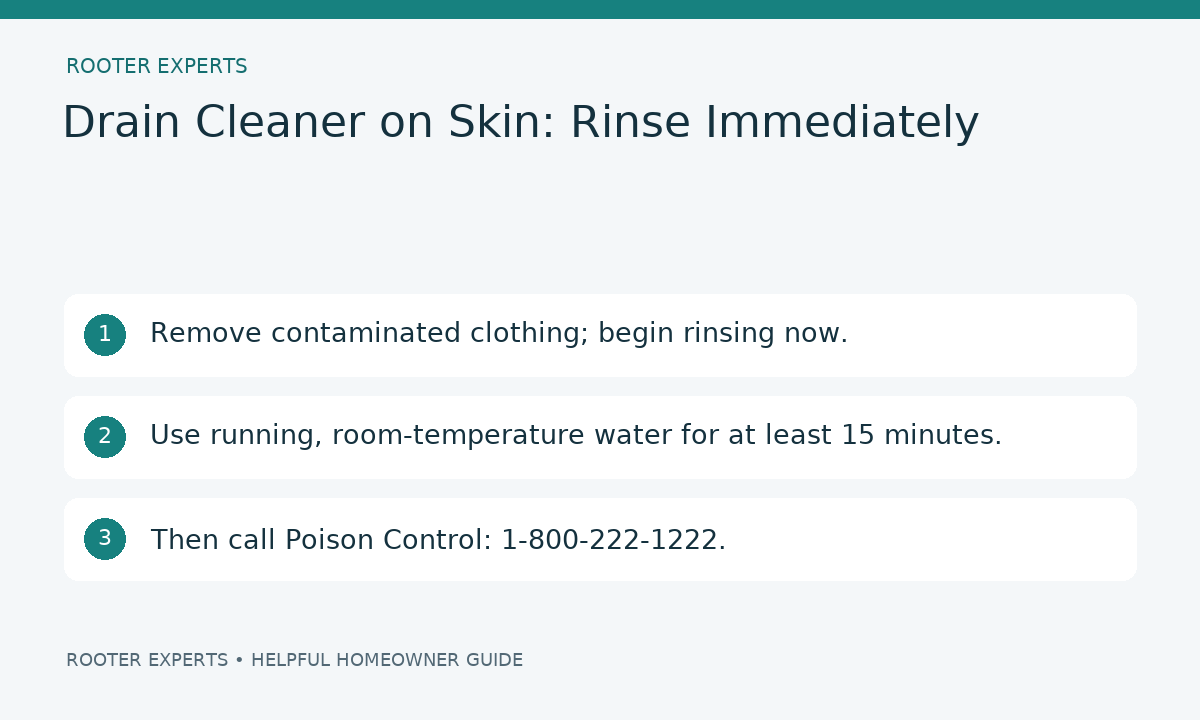
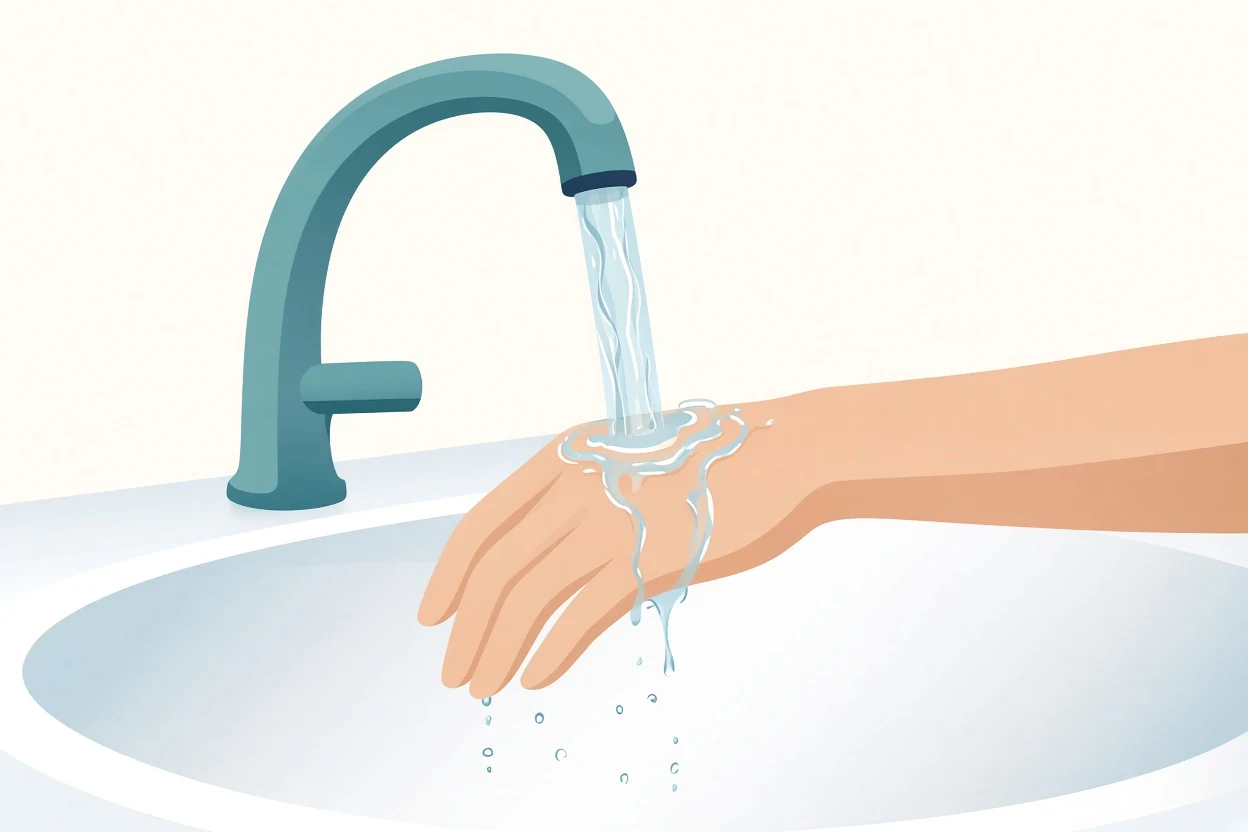
If liquid drain cleaner splashed on your skin, start rinsing immediately. Remove contaminated clothing and use plenty of room-temperature running water for at least 15 minutes, following Poison Control’s first-aid guidance. Do not delay that rinse to finish the clog or look up the product.
If the person collapses, has a seizure, struggles to breathe or cannot be awakened, call 911 immediately.
Rinse first, then get product-specific help
After rinsing, call Poison Control at 1-800-222-1222 for advice. If someone else can call while you rinse, have them help. Describe the product and exposure as accurately as you can.
Severe symptoms need emergency care after rinsing. For persistent or worsening pain, redness, swelling or blistering, contact Poison Control promptly for guidance on urgent medical care. Keep the plumbing work on hold.
Why a small splash still matters
Poison Control explains that corrosive drain cleaners can burn skin. Products differ: some contain enzymes, while others use strong acids or alkalis. Some also produce heat in the drain. A familiar brand name does not tell you how serious an exposure may be.
The splash may come from the drain rather than the bottle. Pouring from too high up, or adding too much cleaner to a fully blocked fixture, can cause splash-back. Treat the personal exposure as the first problem; clearing the blockage is a separate task for later.
Leave the affected drain alone
Once you have addressed the exposure, keep the blocked fixture unused. Standing liquid may still contain drain cleaner. Do not reach into it or put a plumbing tool into the drain while the chemical hazard is unresolved.
A slow drain and a drain holding chemical cleaner are not the same working conditions. Tell anyone who might use or work on that fixture what was added before they approach it. Avoid asking another person to try the same clearing method without knowing about the cleaner.
If your next idea was to use a snake, see Can You Use a Drain Snake After Chemical Drain Cleaner?. That guide explains the plumbing handoff in more detail. This is not the time to test whether another tool will get the clog moving.
What to share when arranging drain service
After the urgent health issue has been handled, tell the drain professional:
- Which fixture is blocked and whether it still holds liquid
- The product name, approximate amount and time it was added, if known
- Whether another product or a tool was used afterward
- Whether cleaner splashed back from the drain
Use what you already know. You do not need to repeat the attempt or touch the standing liquid to gather these details. Explain what happened before the technician starts work, so the chemical history is part of the service discussion rather than a surprise during clearing.
Rooter Experts provides drain cleaning in Bergen and Passaic Counties and nearby Northern New Jersey communities. Give your town when requesting service and mention that chemical cleaner remains in the fixture, if that is the case. Medical guidance comes from Poison Control or emergency care; Rooter Experts can address the remaining drain problem afterward.
Talk with Rooter Experts
Call Rooter Experts at (201) 583-4778 for plumbing or drain service in Northern New Jersey.