
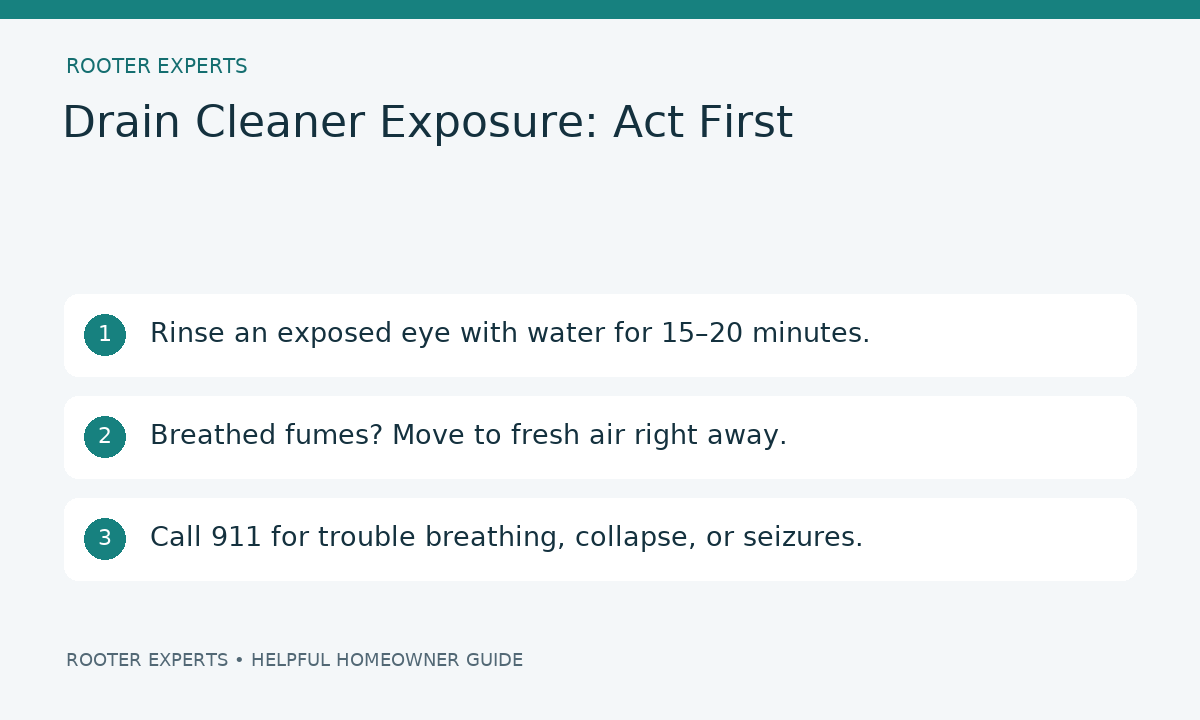
If drain cleaner is in your eye, start rinsing it now. If you breathed its fumes, move to fresh air now. The clogged drain can wait. Poison Control’s first-aid guidance says that acting within seconds to minutes can make a big difference.
If the exposed person collapses, has a seizure, has trouble breathing, or cannot be awakened, call 911 immediately. Do not wait to arrange drain service or call the plumber first.
If drain cleaner got in your eye
Remove contact lenses. Rinse the exposed eye right away with lots of room-temperature water for at least 15 to 20 minutes. Encourage blinking while the water runs. For an adult or older child, a shower may make rinsing easier. For a young child, Poison Control suggests wrapping the child in a towel and letting faucet water run gently over the eye, or slowly pouring water from a pitcher. Aim the water at the bridge of the nose so it runs into the eye rather than pouring it straight into the eye. Keep rinsing for the full time, even if the eye starts to feel better. These steps come from Poison Control’s eye-exposure instructions.
After rinsing, let the eye rest while you call a poison center at 1-800-222-1222 for guidance. Poison Control’s first-aid page also links to its online advice tool. You can also seek that guidance while following the first-aid steps; do not delay the rinse to make the call.
If irritation, pain, vision problems, redness, swelling, or tearing remain one hour after rinsing began, get an urgent eye exam. Go to an urgent care center or emergency room right away unless an eye doctor can see you immediately. If symptoms are severe, go straight to an emergency room after rinsing—do not wait an hour. These timing and escalation steps are from Poison Control.
If you breathed drain cleaner fumes
Move to fresh air immediately and stay away from the fumes. The involved area should be thoroughly ventilated, but do not go back into the fumes to do it. Once you are in fresh air, consult Poison Control’s first-aid page or call 1-800-222-1222 for advice about the exposure. If the person has trouble breathing, collapses, has a seizure, or cannot be awakened, call 911 immediately.
Tell Poison Control what product was involved and what symptoms you can observe. If the container is safely available, its label may help you give accurate details. Do not return to the affected area just to find it. Poison Control explains that drain cleaners vary: some contain enzymes, while others contain concentrated acidic or alkaline chemicals. The product matters when getting exposure advice.

Deal with the drain only after the exposure is addressed
Do not let the unfinished clog distract you from rinsing, getting fresh air, and seeking poison advice. Before anyone works on the drain, tell the drain professional which cleaner was used, when it was poured, and whether liquid is still sitting in the fixture, if you can observe that safely. You do not need to put your hands in the drain to check. If you were considering a snake, read our guide to using a drain snake after chemical cleaner before attempting drain work.
For a clog that remains after the exposure has been handled, Rooter Experts offers drain cleaning in its Northern New Jersey service area, including Moonachie, Hackensack, Clifton, and Paterson. Give your town and the chemical-use details when requesting service. A drain-service call is separate from the immediate medical help above.
Talk with Rooter Experts
Call Rooter Experts at (201) 583-4778 for plumbing or drain service in Northern New Jersey.