
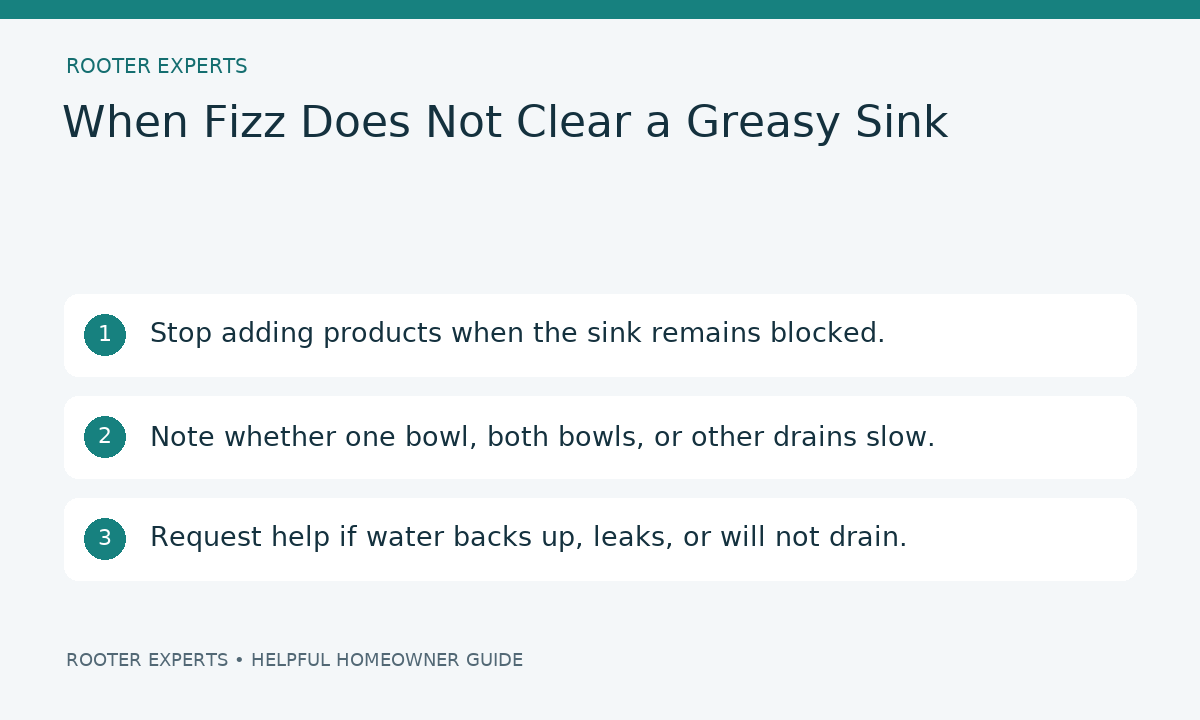
If your kitchen sink is full of dirty water, stop using it and avoid adding more baking soda, vinegar, or drain cleaner. Baking soda and vinegar will fizz, but that reaction is unlikely to clear a tough clog made from oil and grease.
Leave the sink unused while you decide what to do next. If it has a garbage disposal, do not reach inside it. Do not touch a plug or electrical control with wet hands or while standing in water.
Why the fizz usually does not clear grease
Baking soda is alkaline, while vinegar is acidic. Mixing them creates carbon dioxide gas—the bubbles and foam you can see.
That reaction may look powerful, but a household drain is not airtight. The gas can escape through the drain opening instead of building enough pressure to push out the clog. The mixture is also unlikely to be strong enough to dissolve a tough blockage made from grease and oil, according to Poison Control’s guidance on homemade and commercial drain cleaners.
In short, visible fizz is not proof that the pipe is getting clear. Water may still move slowly around the blockage, or the sink may appear better for a short time without the greasy buildup being removed.
What to do after the mixture fails
First, stop pouring products into the drain. Repeating the same mixture uses more material without solving a firm grease clog.
If commercial drain cleaner is in the sink, leave the water and drain opening alone and follow the chemical precautions below. Otherwise, check only what you can see safely:
- Remove dishes and items from around the sink.
- Look at the drain opening for loose food scraps that can be lifted out without reaching into a garbage disposal.
- Note whether the sink drains slowly, does not drain at all, or sends water into the other bowl of a double sink.
- Listen for gurgling, but do not run other fixtures just to test the plumbing.
- Stop using the sink if the water level is rising or the cabinet below is leaking.
These details help separate a kitchen-sink problem from a wider drainage issue. If more than one fixture was already slow or backing up, review the common main sewer line clog symptoms and limit water use until the problem is checked.
Be careful if a drain cleaner was already used
Commercial drain cleaners are different from baking soda and vinegar. Poison Control explains that some contain highly concentrated acidic or alkaline chemicals that can cause serious burns. Some products can also generate heat during use.
Follow the product label and do not keep experimenting with other substances. Keep people and pets away from the sink. If a chemical splashed onto someone, was swallowed, or produced inhaled fumes, use the online help tool from Poison Control or call 1-800-222-1222 for immediate guidance.
Before anyone opens the drain or uses a tool, tell them what product went into the sink, how much was used, and when it was added. You can also read the safety-focused guide on using a drain snake after chemical drain cleaner.
Kitchen drain help in Northern New Jersey
Arrange service if the sink remains blocked, backs up repeatedly, or leaks below the cabinet. Multiple affected fixtures or commercial cleaner left in the line are also reasons to stop experimenting and explain the situation to a professional.
A service visit can focus on where the blockage is and which cleaning method fits the situation. Rooter Experts provides kitchen drain cleaning in Northern New Jersey, including communities in Bergen and Passaic Counties. Give your town when requesting service so coverage can be confirmed for your address.
What to share when requesting service
Share the observations you made above, when the problem started, and whether there is a garbage disposal. Name any products already used, including baking soda, vinegar or a commercial cleaner. These details help the technician plan the next step without asking you to run more water into a blocked sink.
Talk with Rooter Experts
Call Rooter Experts at (201) 583-4778 for plumbing or drain service in Northern New Jersey.